Supplier risk
Know how each supplier's risk is moving.
Every supplier is rated on risk, resilience, data protection and quality, every past rating is kept, and a reassessment starts automatically when its next review date comes round.
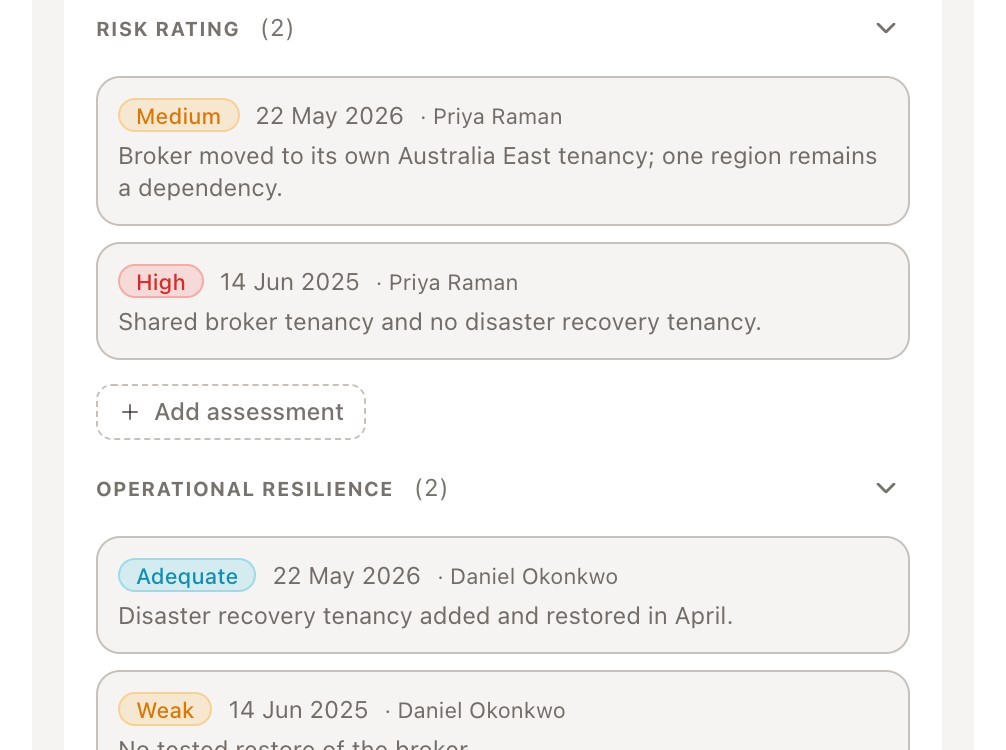
Most contract tools store the paper. AlignX keeps the supplier around it: the systems that run on it, the risks it carries, what it owes you and how its ratings have moved, so a renewal starts from the full picture.

Contracts sit in one place, supplier risk in another, and the systems that depend on them in a third, so every renewal starts with a hunt.
The contract says what you bought, not which systems would stop if they did.
Due diligence was done at onboarding, and nobody has looked since.
The obligations live in the contract PDF, so nobody checks them until something goes wrong.
So renewals get decided on price and relationship.
Seven connected records, from the supplier you onboard to the checklist you close it out on.
Procurement, risk and IT work from the same supplier record, so a renewal is argued on the same facts.
Supplier risk
Every supplier is rated on risk, resilience, data protection and quality, every past rating is kept, and a reassessment starts automatically when its next review date comes round.
Dependencies
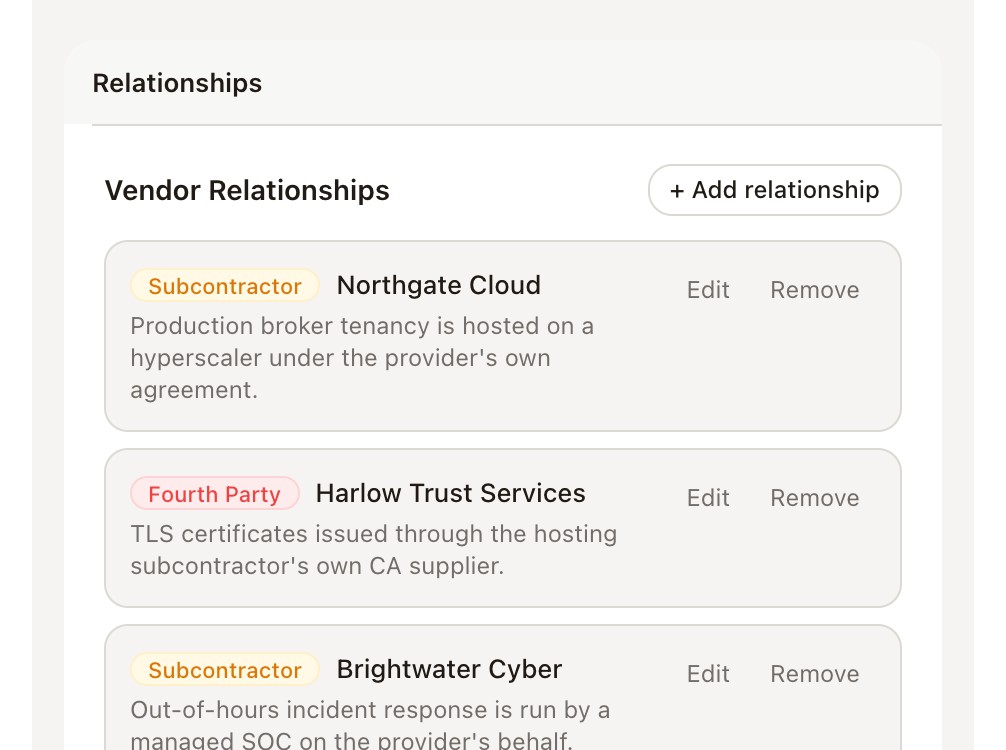
Contracts and suppliers link to the IT components they sit behind and the risks they carry, and can record subcontractors and fourth parties.
Obligations
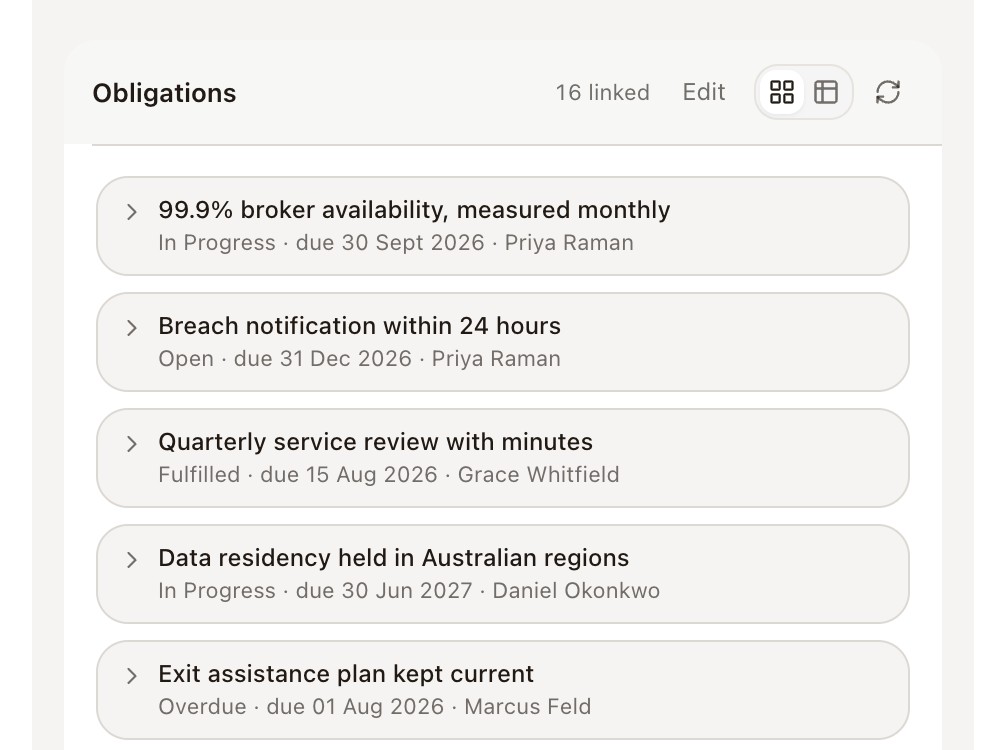
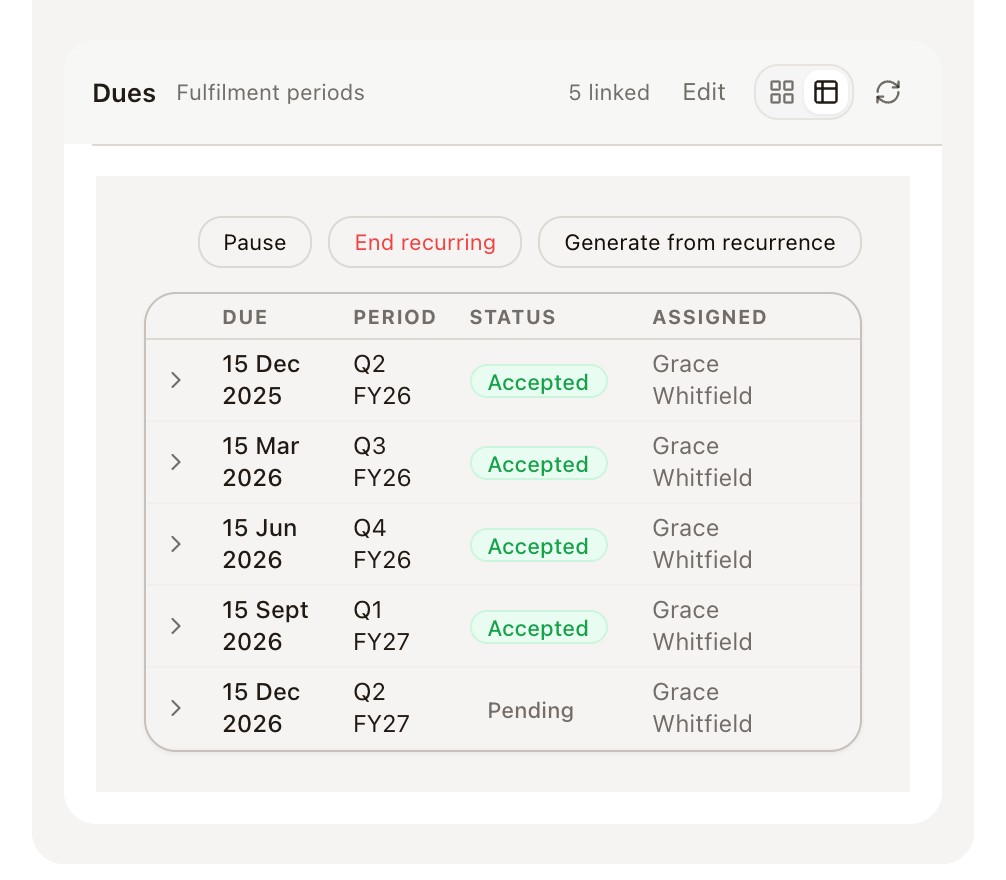
Obligations from clauses, SLAs and regulation, on a schedule that runs until the contract ends, with each period marked accepted, rejected or overdue.
Amendments
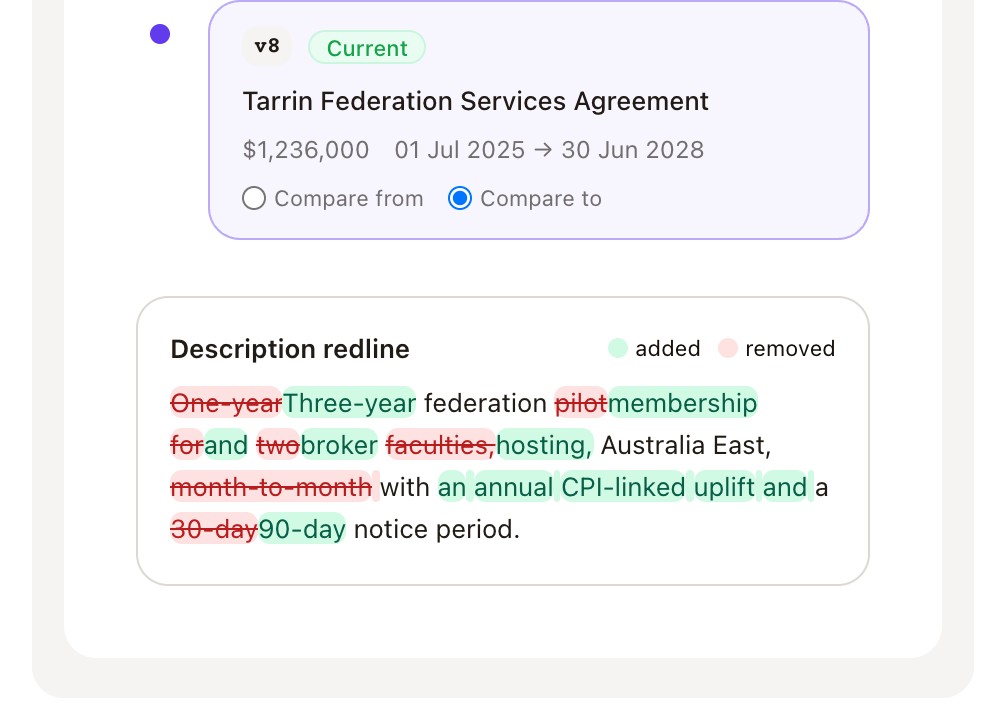
Each amendment is cloned from the version before and linked to it, with the changes to its description marked word by word.
Renewals and exits
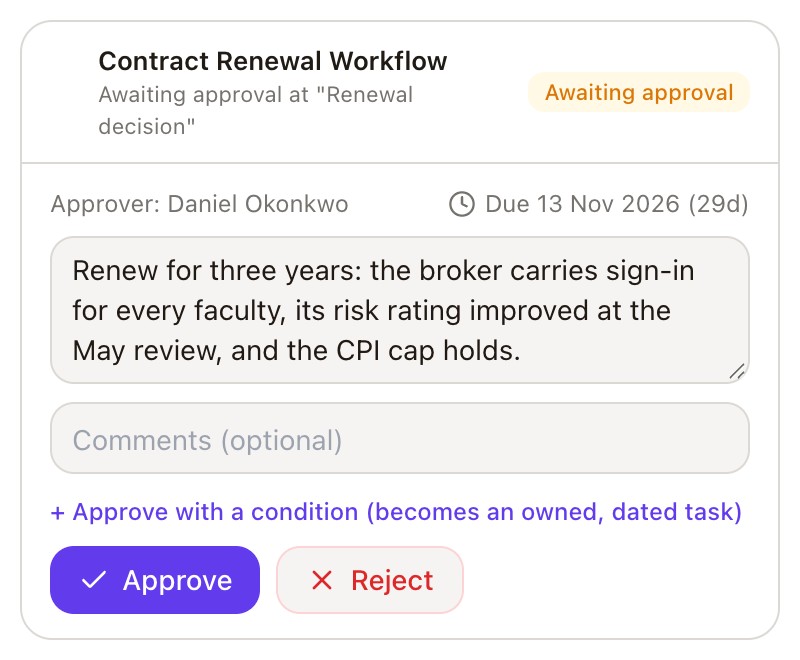
Renewal, amendment and termination each go through an approval, and an exit runs on a closeout checklist with an owner and a date for each item.

Every contract read with the supplier behind it.
Obligations that get checked
What a supplier owes is scheduled and signed off, not left in the PDF.
Risk that stays current
Ratings are reassessed on schedule, with their history, instead of filed at onboarding.
Exits with an owner for every step
Each closeout item has an owner and a completion date.
A contract register shouldn't just store the paper. It should show what you're relying on.
You don't need a procurement overhaul to start.
Built inside your Microsoft 365. Your data. Your controls. Your suppliers.
Each supplier is rated on risk, resilience, data protection and quality, every past rating is kept, and a reassessment starts when its next review date arrives.
Yes. Contracts and suppliers link to the IT components they sit behind, and to the risks they carry.
Each obligation records its source, owner, due date and penalty, repeats on a schedule until the contract ends, and each period is marked accepted or rejected, with a missed one shown as overdue.
A renewal goes to an approver, who chooses to renew, not renew, or let it auto-renew, with the supplier's record alongside.
Each amendment links to the version before it, and the changes to its description are marked word by word.
Termination goes through approval, and the exit runs on a closeout checklist with an owner and a completed date for every item.