For the Business Analyst
From requirements to real outcomes. Capture context. Prove impact.
Requirements, analysis, design and delivery in one living model, so every decision keeps its context and delivers value.
Fewer requirement changes
-30%
Payments requirement approved
Full lineage captured · Business Analyst
30 to 45%
less time gathering and reconciling requirements
25 to 35%
fewer requirement changes after commitment
20 to 30%
faster impact analysis on change requests
The challenge
You know these walls.
Requirements scattered
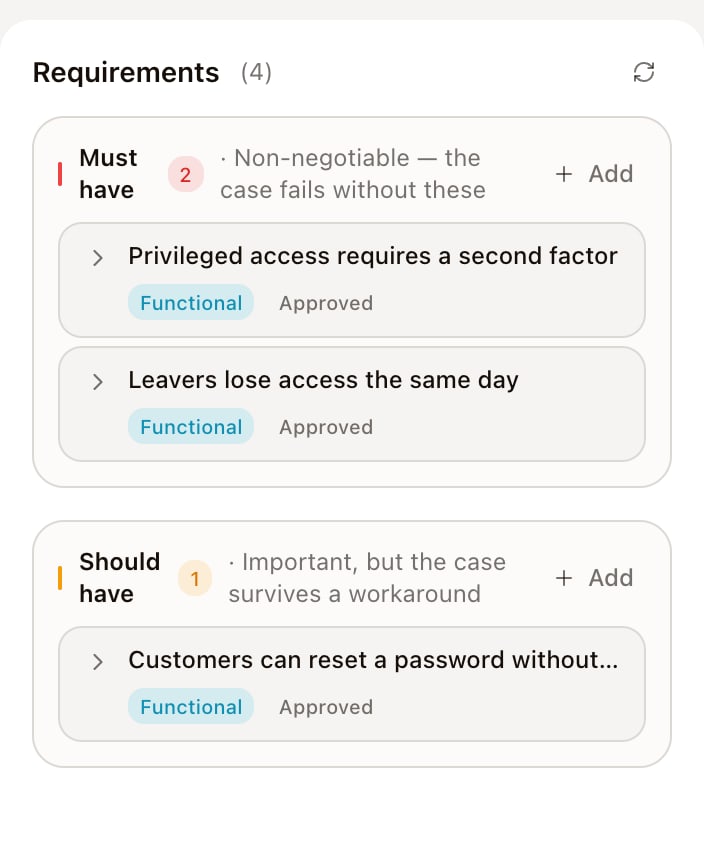
Requirements are scattered across documents, emails and tools.
Impact unknown
It is hard to see the full impact of a requirement change.
Fragile traceability
Traceability from requirements to outcomes is manual and fragile.
Value lost
Proving value is difficult when context gets lost.
Impact analysis
See cross-domain impacts, dependencies, risks and downstream changes.
- Impacted areas and duplicates detected at intake
- Incoming requirements classified, with stakeholders suggested
- Compare options against strategy, risk, capacity and expected value
Traceability by design
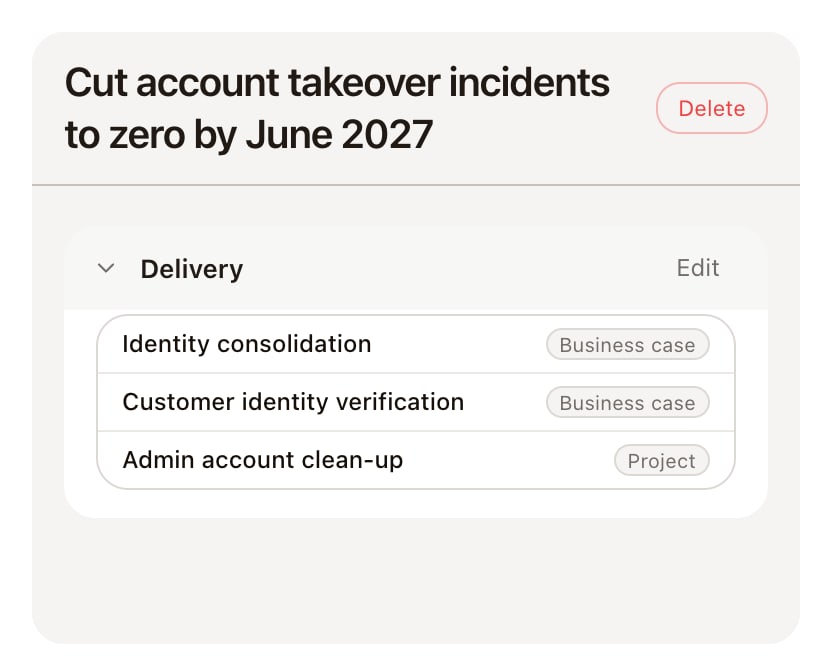
Trace requirements to design, delivery, tests and outcomes in real time.
- Record requirements with purpose, rationale and stakeholders
- Stronger traceability from requirement to outcome by design
- Real-time insight reduces manual work and speeds decisions
Stronger quality
Link controls, policies and risks to each requirement by design.
- Evidence collected as work happens
- Assessments run from reusable templates
- Deliver what matters and prove the value
“AlignX gives us the context we need to capture the right requirements, understand impact and prove outcomes, without the manual chase every time.”
Senior Business Analyst, Australian Government Agency
What Business Analysts ask us.
What BA and requirements tools does AlignX replace, and what stays?
AlignX replaces your requirements management tool (Jama, Blueprint, DOORS Next), your process modeller (standalone Visio, ARIS), and consolidates your BA content out of scattered Confluence pages. It integrates with Jira for delivery, Confluence for supporting docs, and your EA and portfolio models so requirements sit in the enterprise context.
If we use Jira and Confluence today, what changes?
Delivery teams keep working in Jira. Confluence keeps hosting supporting content if you want. AlignX becomes the connected home for structured BA artefacts: requirements, process models, capability maps and traceability. You gain the traceability BABOK asks for without losing the tools your teams already use.
How does AlignX handle traceability from strategy through to requirements, design and testing?
Every requirement traces up to the capability and objective it serves, and down to the design, build and test artefacts that satisfy it. Change impact analysis is instant: if an objective shifts, you see every requirement affected. This is the traceability BABOK asks for, without the manual matrix.
Can I capture BABOK-aligned artefacts in AlignX?
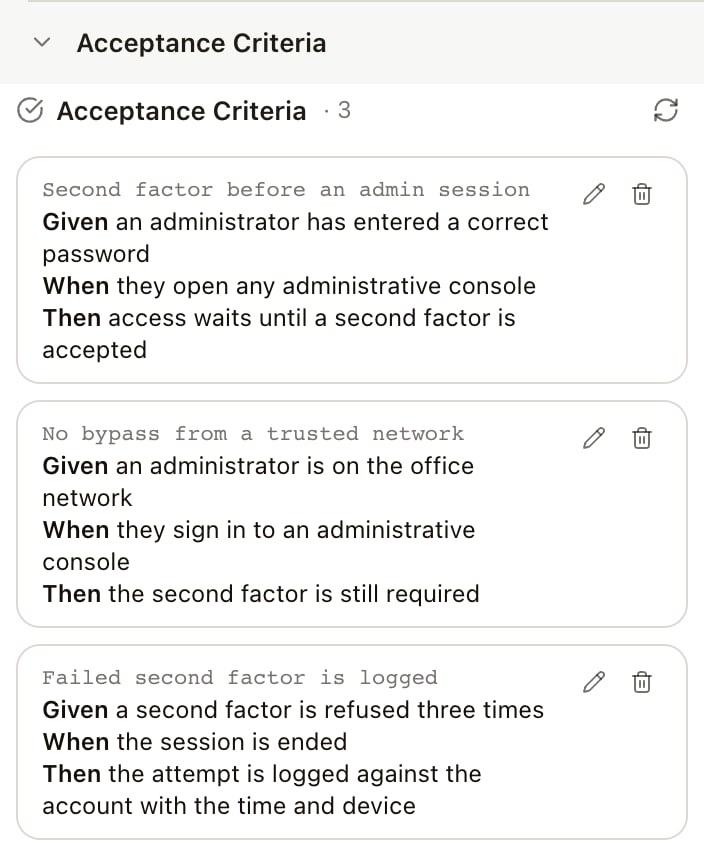
Yes. AlignX includes templates for the BABOK knowledge areas: stakeholder register, business case, current-state and future-state models, requirements catalogue, gap analysis, use cases and acceptance criteria. You can customise or replace any of them.
Can AlignX map current state, future state and gap analysis in one place?
Yes. Current-state and future-state process models, capability models and data models live in the same workspace, with gap analysis generated by comparison. Reviewers see the delta highlighted, not a side-by-side you have to interpret.
How does AlignX support requirements review, sign-off and change control?
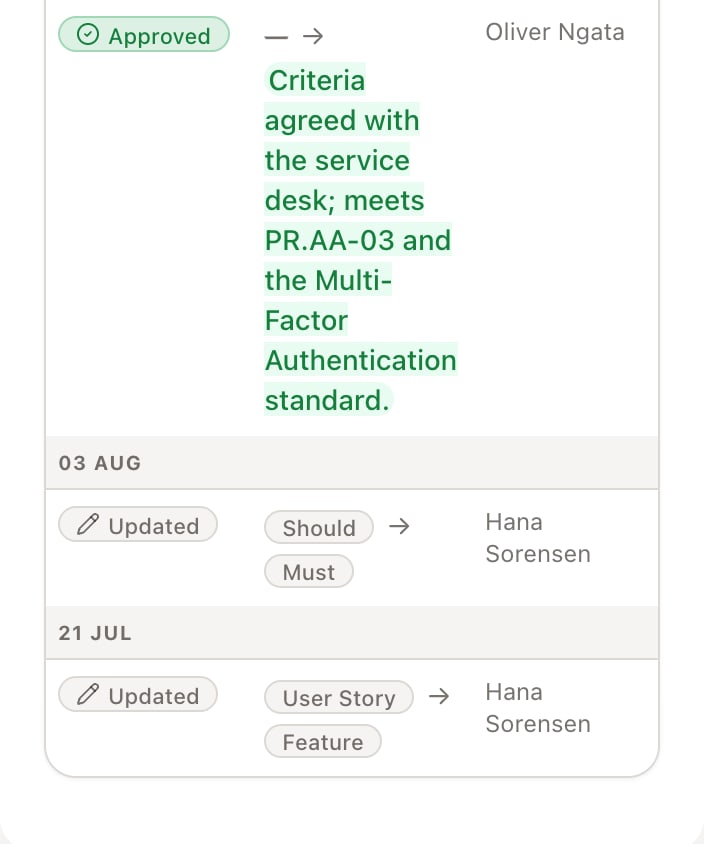
Every artefact has configurable review and approval workflows. Sign-off is captured with evidence and audit trail. Change requests link to affected requirements automatically, so your CR log is a byproduct of the work, not a separate spreadsheet.
What does the BA workflow look like end to end in AlignX?
Elicitation (stakeholders, interviews, workshops) into the enterprise model, requirements catalogued with priority and acceptance criteria, current-state and future-state modelled, gap analysis generated, requirements traced to Jira delivery items, sign-off captured, benefits linked. One platform, one BA lifecycle.
See where you stand.
Ten minutes, twenty-one questions, an instant maturity score and your Fragmentation Index.