For the strategy lead

Turn strategic intent into proven impact. Connect the dots that drive value.

Plans, focus areas, objectives, key results and the investments that carry them in one model, so the amber on the board traces to the check-in that made it amber.

In one sentence

AlignX turns strategic intent into funded work and measured outcomes, and keeps that line of sight live as priorities change, so the strategy lead can show what the strategy actually did.

Written forChief Strategy OfficerHead of StrategyStrategy Director

The solution

What the strategy lead has to show.

The cascade

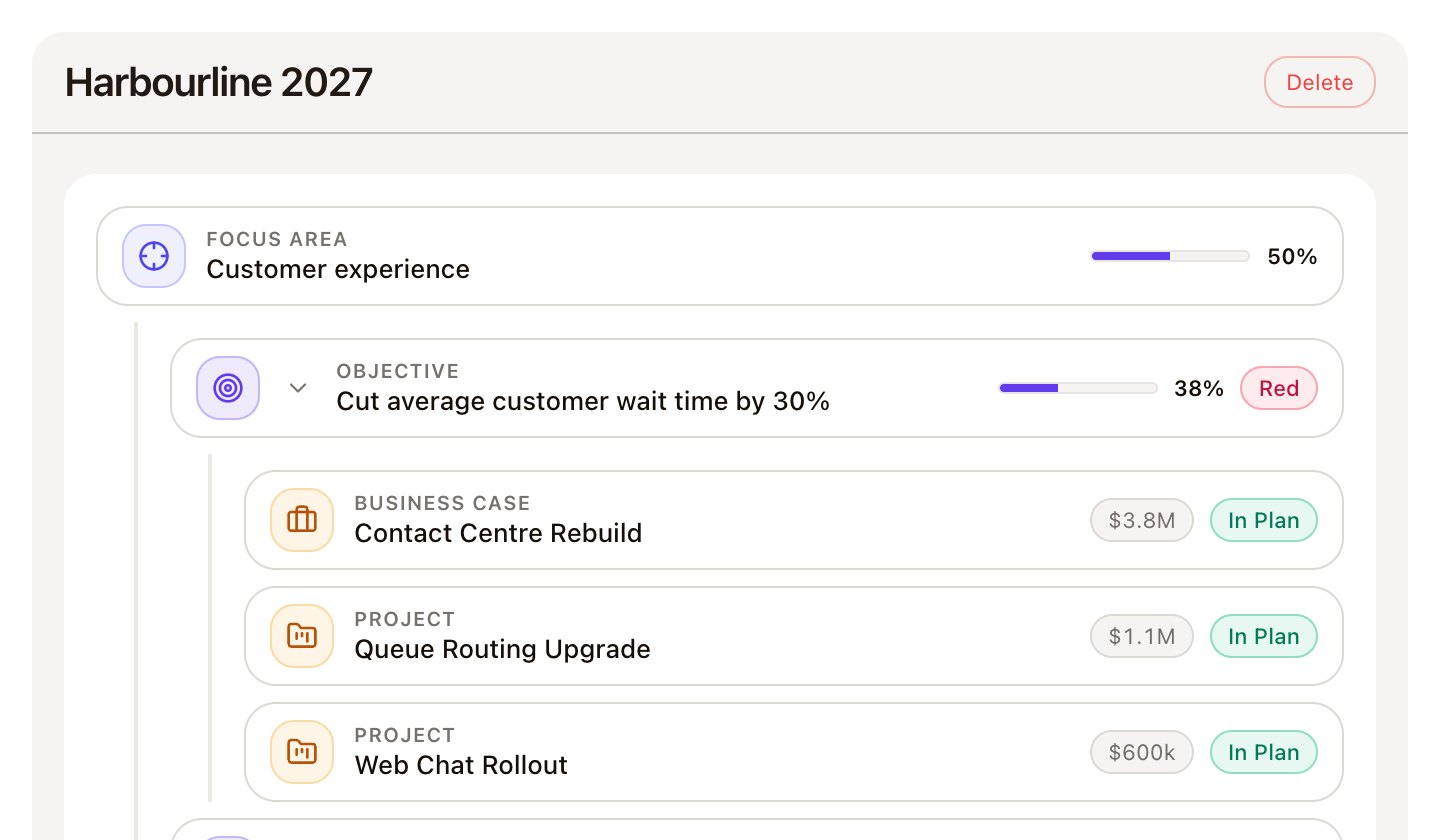
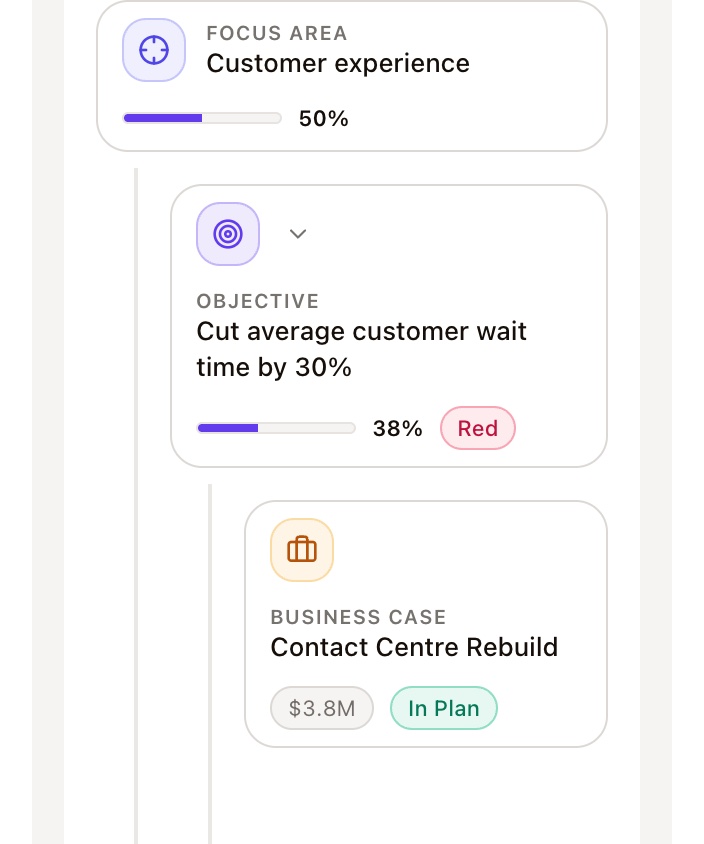
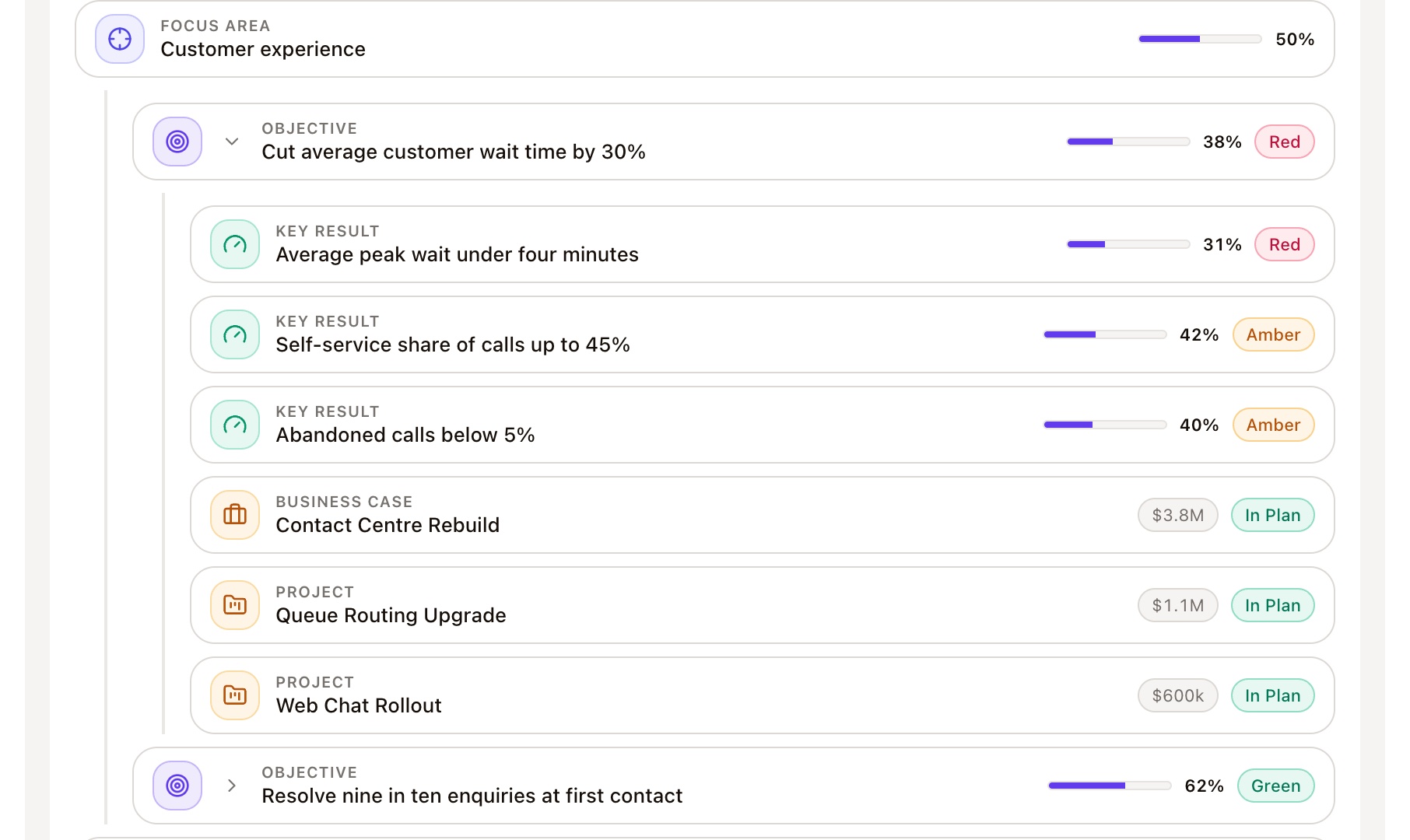
Plan, focus area, objective, key result. One shape, weighted.

Direction-aware progress rolls up through the cascade, so the health of a plan is the health of its key results, not a slide.

See the portfolio product

Investment prioritisation

Investments ranked on strategy, value, risk and deliverability.

The cohort is scored on the objectives it serves, so what gets funded is what the strategy asked for. Move a rank and the reason is stored.

See the portfolio product

Scenario workbench

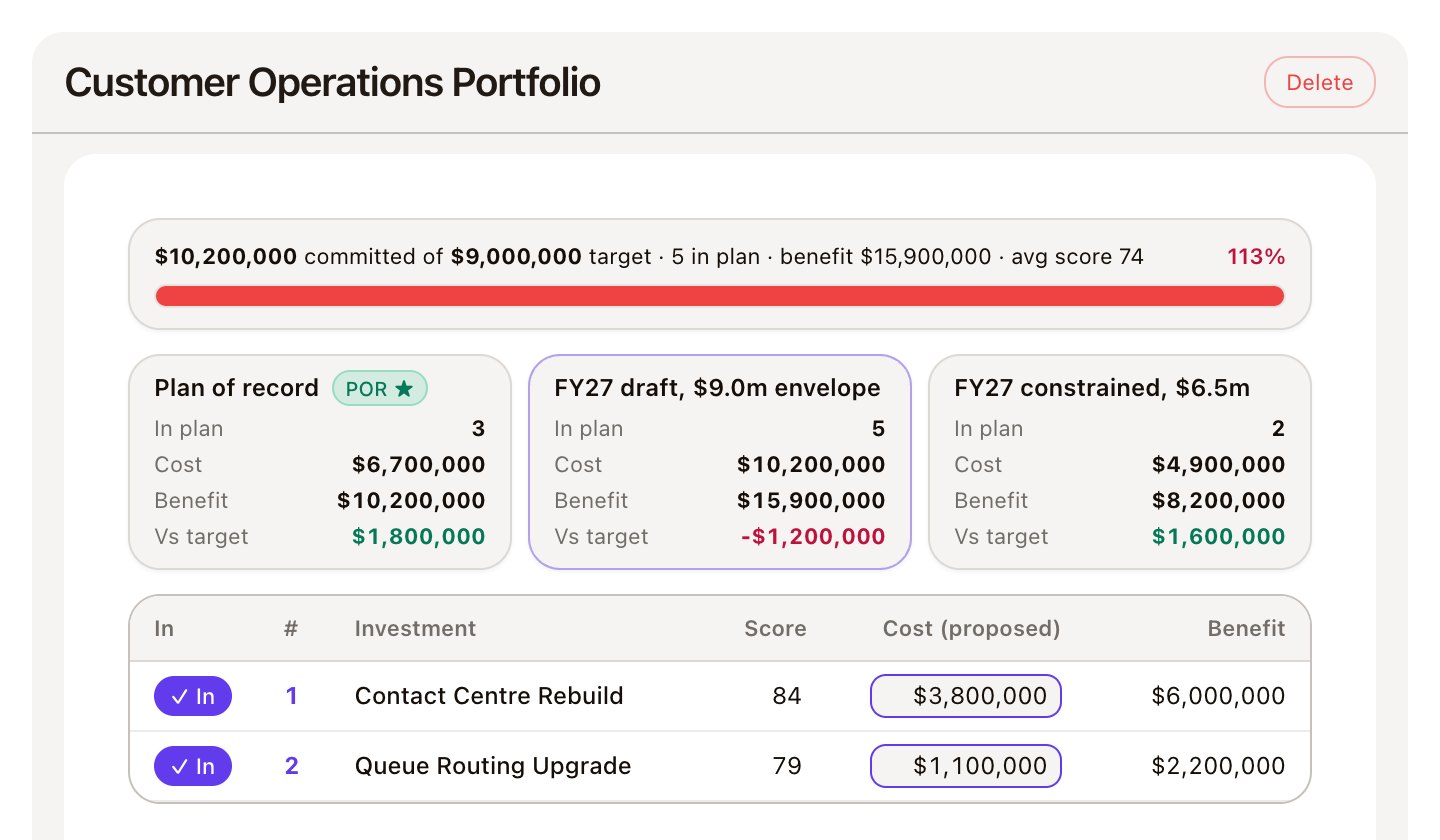
Scenarios against the envelope, then one becomes the plan.

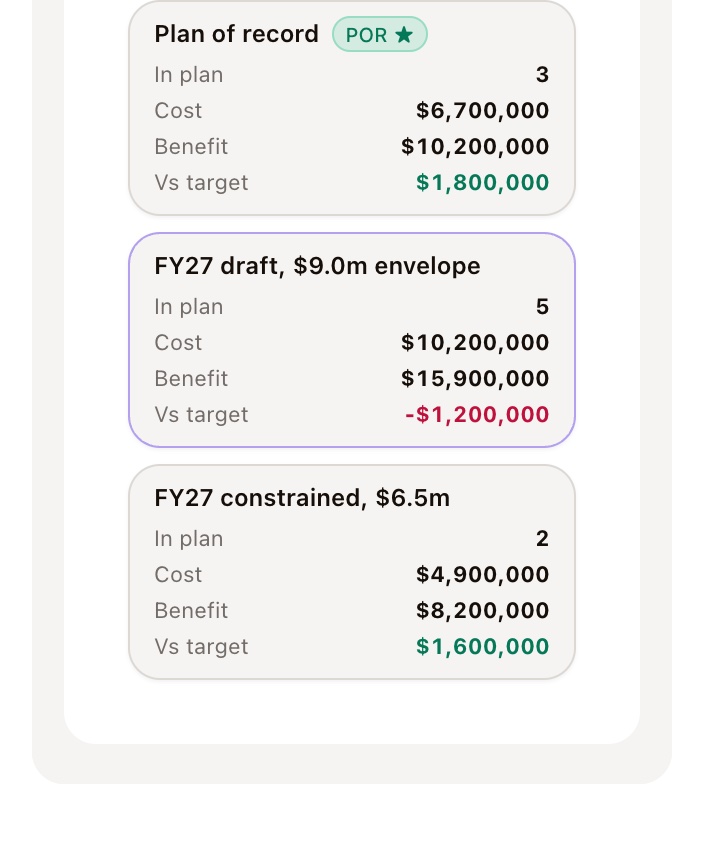
The draft commits $18.16m against a $10.0m envelope. The waterline is drawn at rank seven, and everything under it is what the strategy is choosing not to do.

See the portfolio product

Objective progress

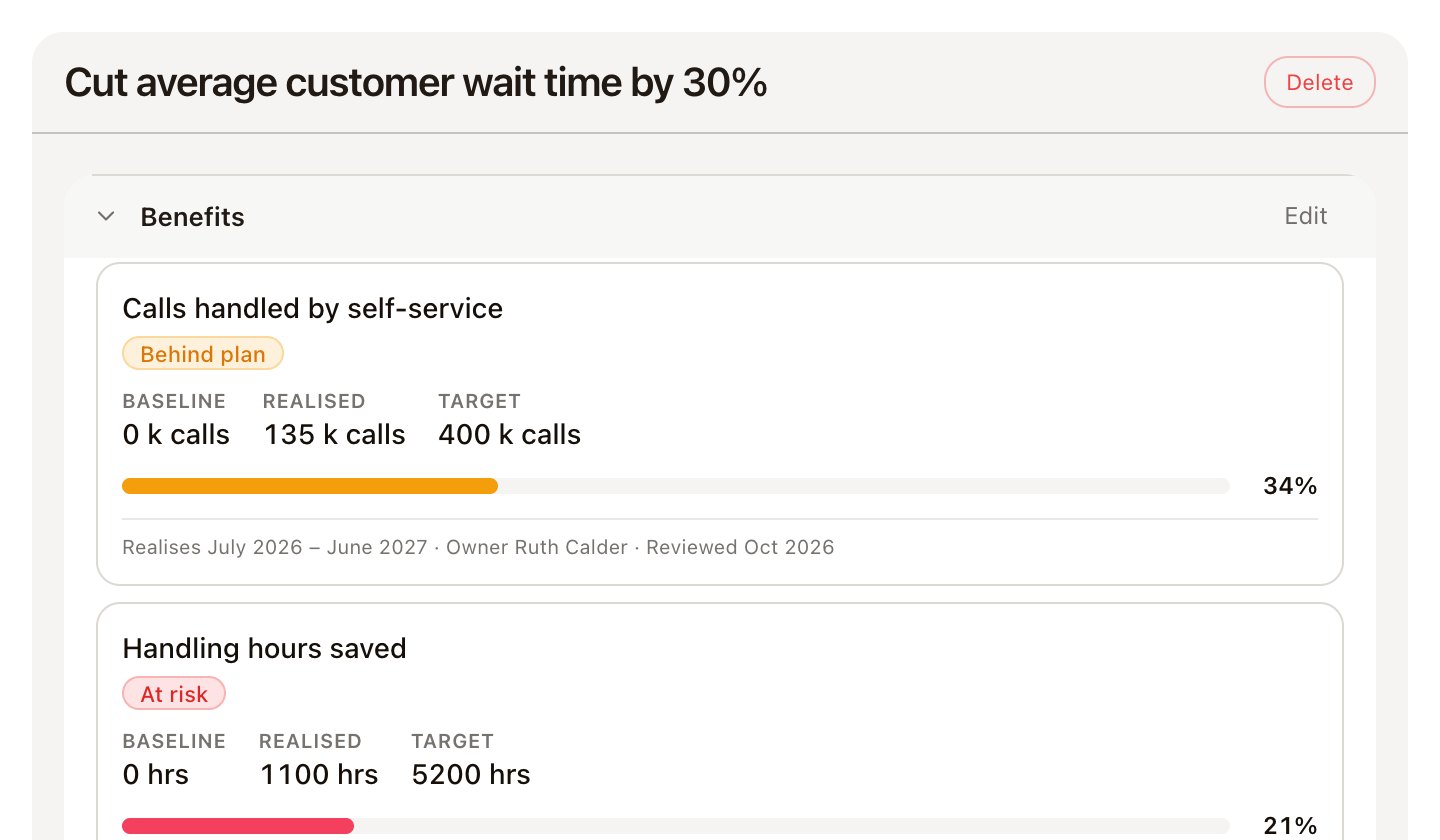
Progress with a trend line, not a status typed into a slide.

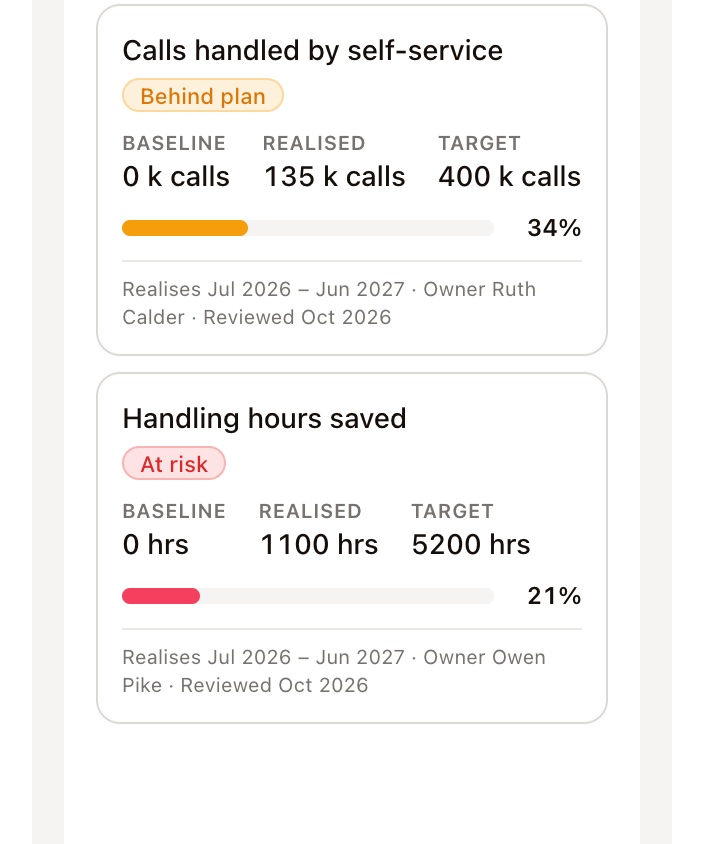
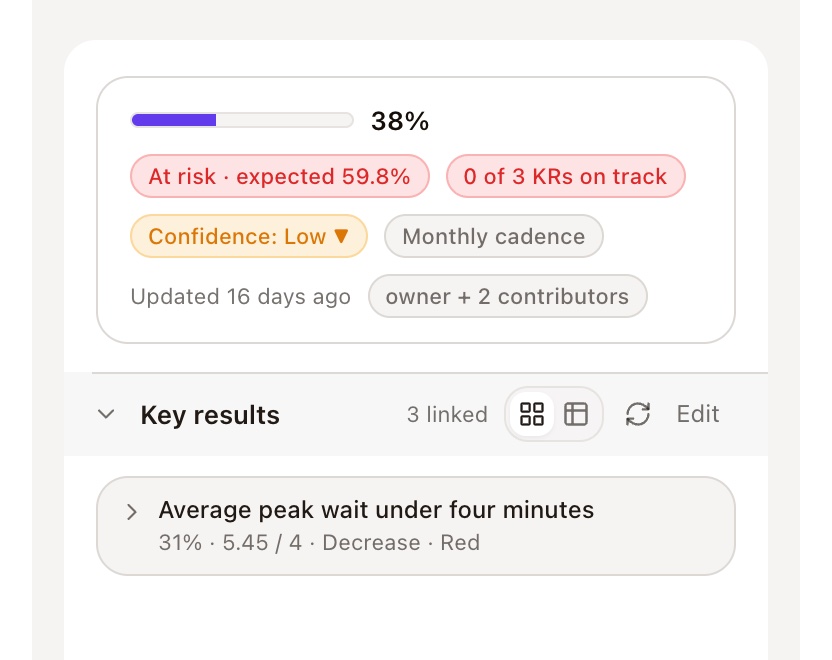
Sixty-two per cent, up 14.8 per cent on last month, across nine published closes. The sparkline is the objective's own check-in history, not an impression of one.

See the report builder

Day to day

What changes.

Without AlignXWith AlignX
The strategy refreshA deck that never meets the funded work.
The strategy refreshObjectives and key results as records the investments point at.
The prioritisation debateThe loudest sponsor wins.
The prioritisation debateScored on strategic fit, value, risk and deliverability.
The quarterly reviewProgress typed into a template.
The quarterly reviewKey-result health rolled up from the check-ins.
The board questionWhich investments moved the objective? A guess.
The board questionThe cascade from plan to key result to investment, one line.
The reprioritisationPriorities change and the intent goes with them.
The reprioritisationThe rationale stays on the record.
The budget cutWhich initiatives to stop? A week of meetings.
The budget cutThe ranked cohort against a smaller envelope, drawn in minutes.

The AlignX technology

Nothing new to govern.

  • Runs inside Microsoft 365In your tenant, on your Dataverse. Nothing leaves it.
  • Entra ID governs who sees whatThe roles you already run decide access. No second directory.
  • Australian data residencyYour Dataverse environment sits in an Australian region. Purview and retention policies apply as they do everywhere else.

How AlignX sits inside Microsoft 365

Questions

What strategy leads ask us.

How does AlignX change what my strategy function actually needs?

You stop needing a separate OKR tool, a strategy tool, a benefits tracker and a spreadsheet ecosystem. AlignX holds strategy, capabilities, investments, portfolios and benefits in one connected model. It replaces or absorbs your PPM and any standalone strategy tools. Your strategy team focuses on strategy, not on herding tools.

What tools does this consolidate for the strategy office?

Typically: your PPM tool, your OKR or strategy tool (Cascade, Perdoo, Workboard), your capability planning spreadsheets, your benefits tracker, and your board pack builder. All of them live in AlignX with one UX, one source of truth, and integration into finance and delivery systems for actuals.

How do we stop our strategy dissolving the moment it hits the delivery layer?

AlignX makes strategy the parent record for every capability, initiative, investment and benefit. Delivery teams cannot approve work that does not trace to a strategic objective, which enforces line of sight without you having to police it. The Strategy Refresh workflow keeps everything downstream in sync.

Can AlignX handle our strategy model (objectives, KPIs, benefits, capabilities) without another spreadsheet?

Yes. AlignX ships with a configurable strategy model that supports OKRs, capability-based planning, benefits maps and mixed models. You configure it to how your organisation thinks. If you already run OKRs elsewhere, AlignX integrates first, then absorbs as you retire the standalone tool.

How do I prove strategic contribution when execution is delegated across business units?

Every initiative rolls up to the objectives it serves, with benefits realisation tracked against the KPIs those objectives target. You get a single view of strategic contribution by business unit, portfolio or objective, evidenced not asserted. This is what boards and shareholders are actually asking for.

What happens to my strategy map when we refresh strategy mid-year?

The Strategy Refresh workflow lets you evolve objectives, capabilities or KPIs and flows changes through to every dependent initiative, benefit and investment. Nothing is lost or orphaned. You can also run parallel strategy versions to compare \"current path\" vs \"proposed refresh\" before you commit.

How does AlignX help me have better conversations with the CEO and Board?

You walk in with live strategic execution data, not a stale slide deck. Objectives on track vs at risk, benefits realised vs planned, and where capital is actually going.

See where you stand.

Ten minutes, twenty-one questions, an instant maturity score.