Strategy and portfolio management

From demand to delivered value,
in one connected model.

Portfolio decisions become connected, accountable investments. Not spreadsheets and status decks, but live visibility of strategy, architecture, risk, resources, vendors, delivery and outcomes.

The project register: twenty investments with lifecycle, category, portfolio, programme, manager and total investment down the columns
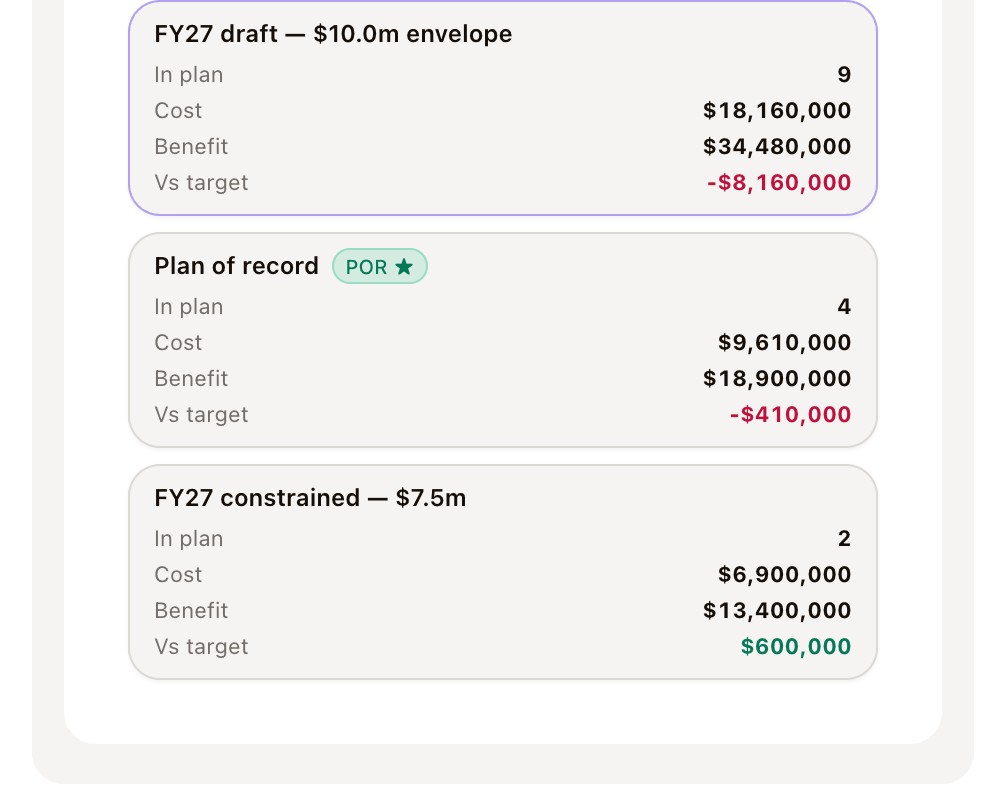
The scenario workbench: seven ranked investments against a $10.0m envelope, four in plan at 99% committed

In one sentence

AlignX Strategy and Portfolio Management connects strategic objectives to demand, investment, delivery and outcomes, so funding decisions are made on consistent evidence and benefits are checked against the business case that won the money.

The problem

Not a portfolio problem. A connection problem.

Each one of these has an owner who could answer it. None of them can answer it from one place, which is why the board gets a rebuilt spreadsheet instead.

  • The portfolio is a spreadsheetRebuilt every quarter, out of date the day after the meeting.
  • Prioritisation is a debateThe loudest sponsor wins because nothing scores the options.
  • Capacity is an afterthoughtInvestments are approved that the organisation cannot staff.
  • Dependencies surface lateDiscovered at the gate, or after it, never before.
  • Status is reported, not knownRAG is typed into a form by whoever owns the slide.
  • Strategy and delivery drift apartObjectives live in one tool, the work that carries them in another.
  • Benefits are never checkedThe case is approved, then nobody returns to it.

The decision lineage

From demand to proven outcome.

Seven steps, each one a record that keeps what it was decided on. Numbered because the order is real, not because a rail looked good.

  1. 01DemandEvery idea and request through one front door.
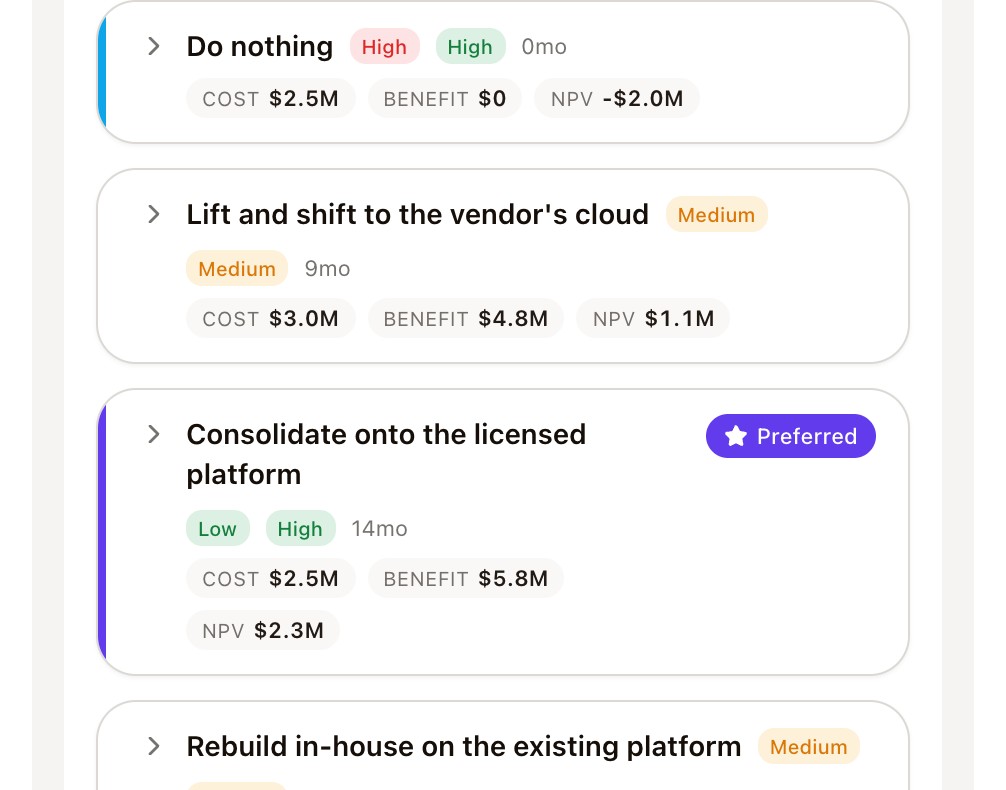
  2. 02AppraisalOptions costed, valued and risk-adjusted.
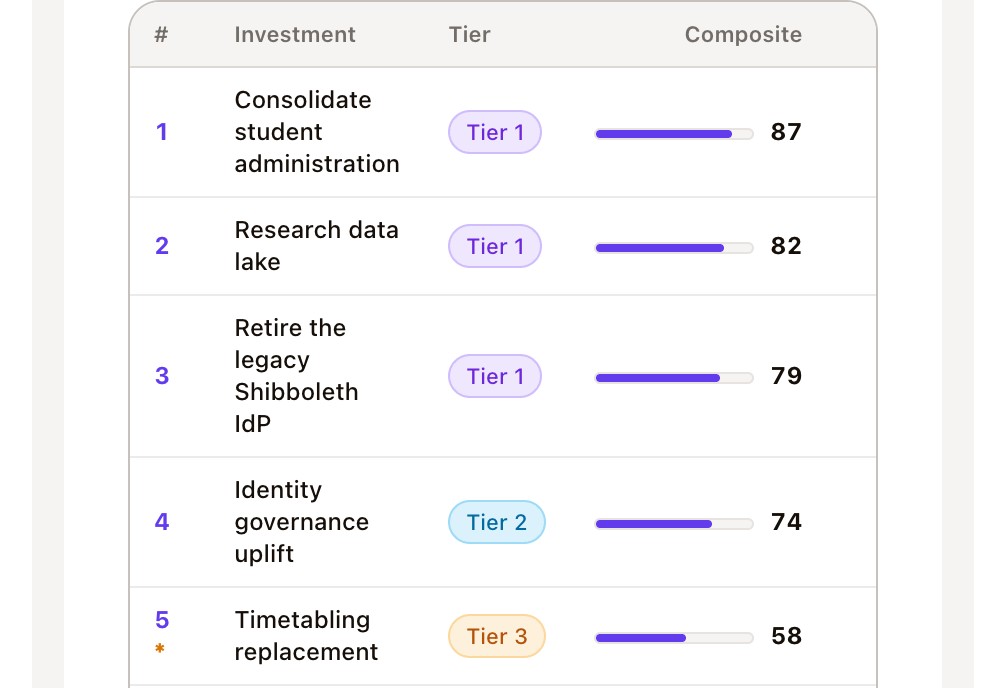
  3. 03PrioritisationScored on strategy, value, risk and deliverability.
  4. 04CommitmentA plan of record inside the budget envelope.
  5. 05GovernanceGates decided with dependencies on the table.
  6. 06DeliveryMoney, milestones and health, tracked live.
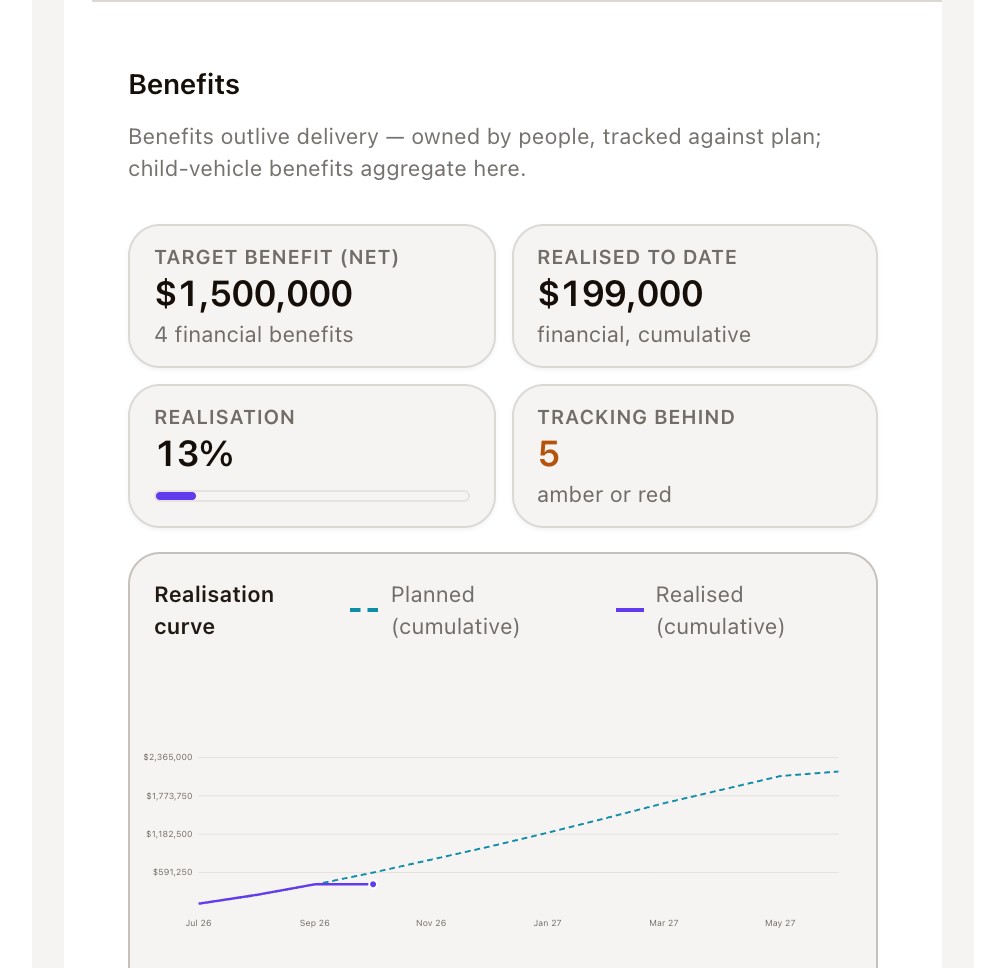
  7. 07BenefitActuals against the case that won the money.

Who it is for

Built for the people who own this work.

What they use it for

  • Establish one governed intake process for enterprise ideas and demand.
  • Score and prioritise investment proposals against agreed criteria.
  • Compare portfolio scenarios within budget and capacity constraints.
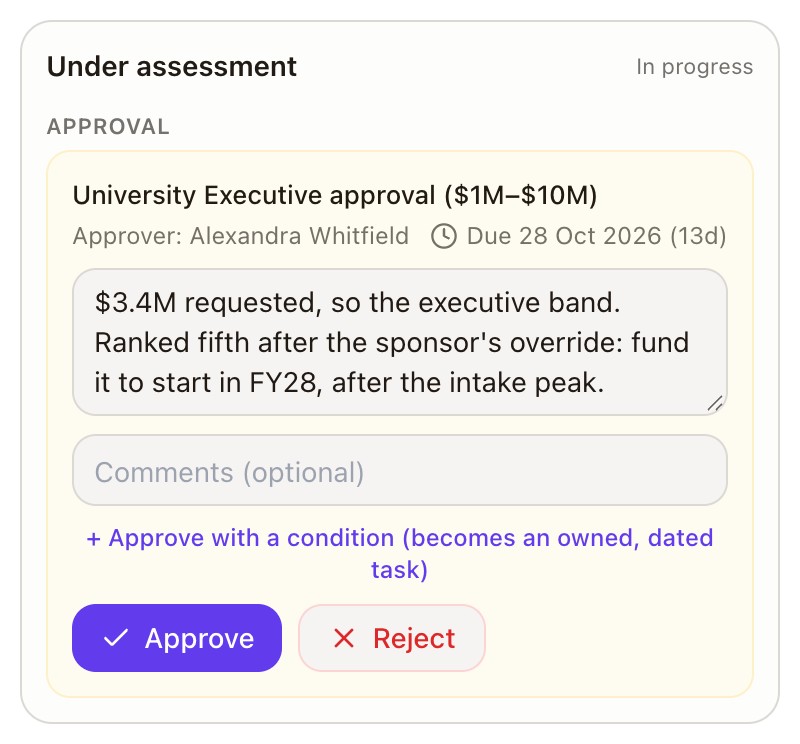
  • Govern investments through stage gates, approvals and conditions.
  • Detect strategy-to-delivery drift while corrective action is still possible.
  • Trace realised benefits back to strategic objectives and business cases.
  • Rationalise an overloaded or underperforming portfolio.

The impact

A portfolio you can defend.

  • Decisions that hold upEvery approval carries its score, options, rationale and approvers.
  • A live portfolioNot a quarterly rebuild. The current picture, all the time.
  • Commitments you can staffCapacity is a first-class step, not a field on a form.
  • Fewer surprises at the gateDependencies and conditions are visible before the decision.
  • Money that reconcilesOne write path from budget to forecast to actual to variance.
  • Benefits actually checkedActuals against the case, after delivery, on the record.

Six questions

Worth asking of whatever you run today.

How do you currently decide which initiatives receive funding?

In AlignX every proposal is scored on the same four criteria, strategic fit, value, risk and deliverability, and ranked against the others. The score, the scorer and the date stay on the record, so the decision can be revisited with its evidence.

Can you identify where the portfolio exceeds available delivery capacity?

The scenario workbench sets the ranked cohort against the budget envelope and the resource capacity in the same model, so the point where the money or the people run out is visible before anything is committed.

What happens to the original decision rationale when priorities change?

Nothing is overwritten. A reprioritisation is a new decision on the same record, with its own rationale, author and date, so the original reasoning stays readable next to the change.

How much manual effort is required to prepare portfolio reporting?

Reports read the live records. A programme's dashboard, its gate history and its benefit tracking are views of the same data the teams work in, not a deck rebuilt each month.

Can you prove which investments delivered the outcomes promised in their business cases?

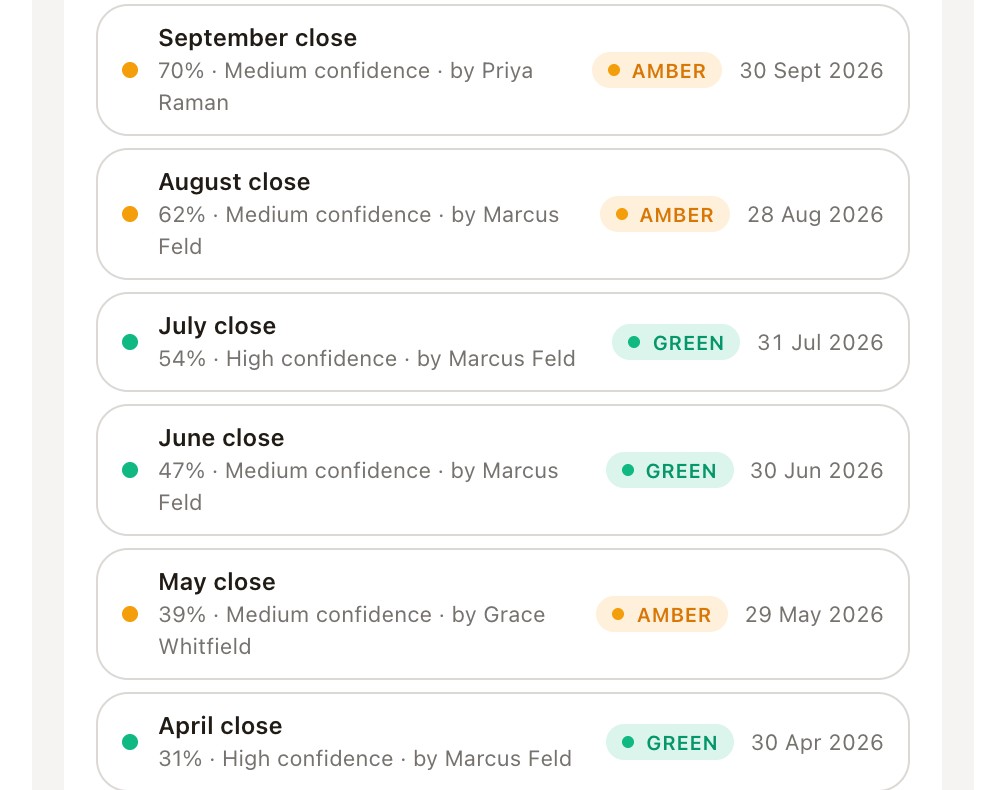
The business case that won the funding stays linked to the delivery and to the benefits recorded against it, so realised value is compared with the promise on the same page.

Which initiatives would you stop if the investment budget were reduced today?

Because every initiative carries its score, its objective and its dependencies, a reduced envelope in the scenario workbench shows which ranked items fall below the line and what else they take with them.

Prove which investments moved the needle.

It runs inside your Microsoft environment, on your data, under your controls.