Risk
Know which risks need attention.
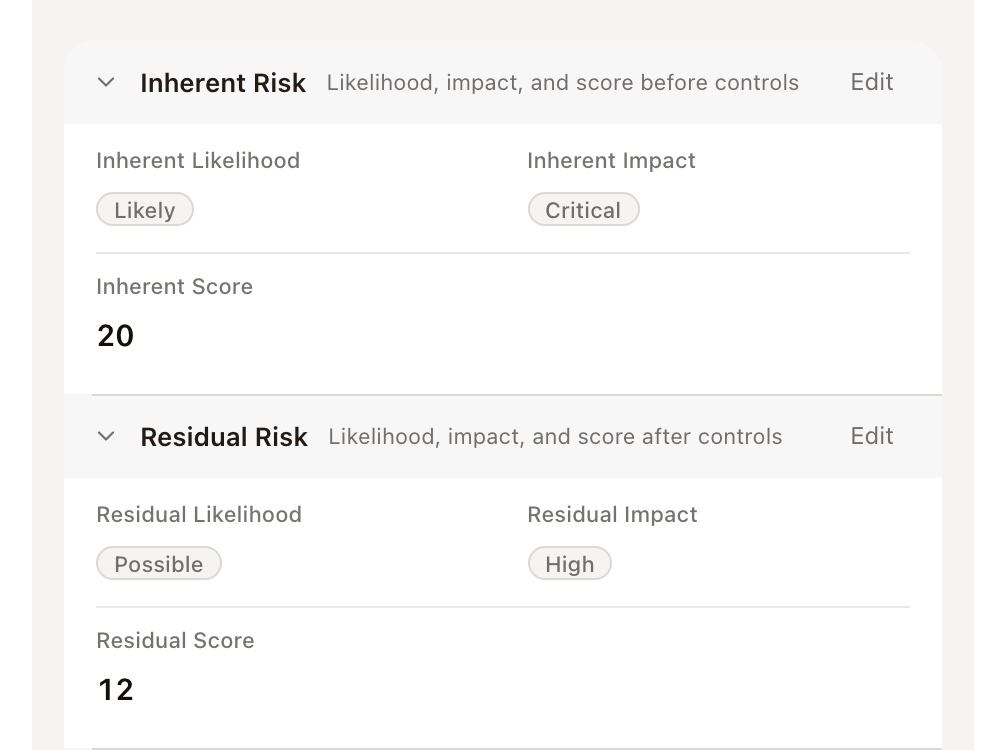
Every risk is rated before and after its controls and checked against the appetite and tolerance you agreed. Its treatment needs approval, never from the person who owns the risk.
Most GRC tools keep a separate register for each job. AlignX brings them together, so you can see which controls meet each requirement, who approved each risk and whether each finding is really fixed, without piecing it together for every audit.


The answers are usually there. They just take too long to find, piece together and check.
Each framework keeps its own copy of the control, so nobody is sure which one is current.
The decision is in the minutes somewhere. Why it was made, and who was allowed to make it, often isn't.
An action marked complete doesn't prove the fix worked.
So assurance gets pieced together again before every audit.
Start with what you have to meet. Connect your policies, controls and risks to it. Then follow the decisions and findings that show what was done.
Risk, compliance and audit work from the same records, so the board hears one answer.
Risk
Every risk is rated before and after its controls and checked against the appetite and tolerance you agreed. Its treatment needs approval, never from the person who owns the risk.
Controls and frameworks
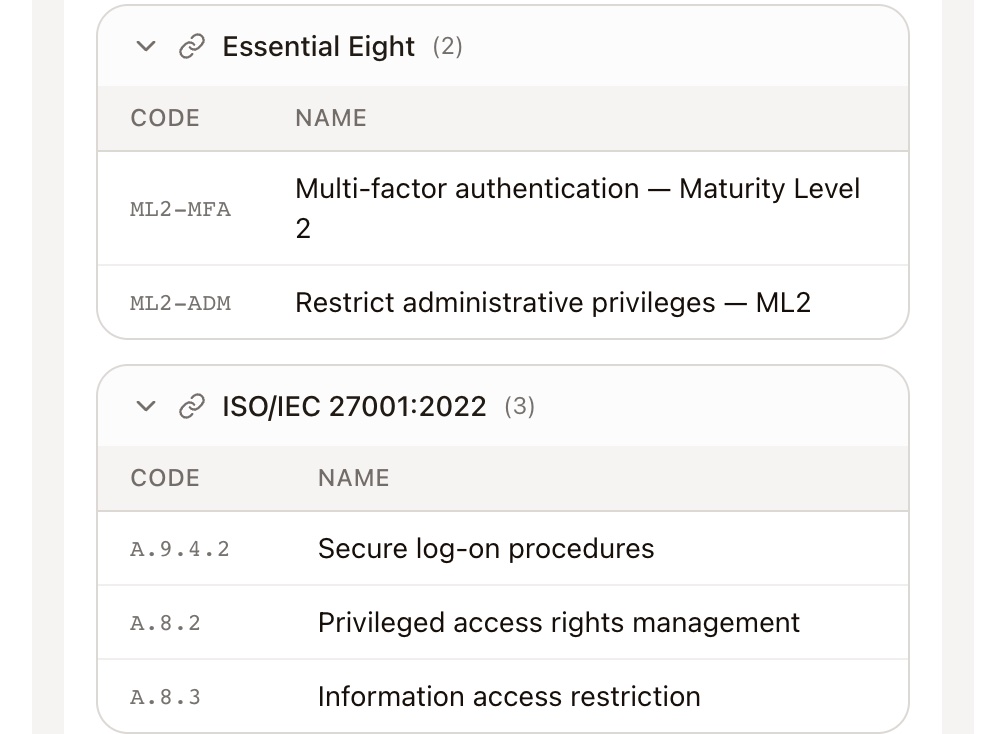
One control library, mapped to the requirements of each framework you answer to.
Policies
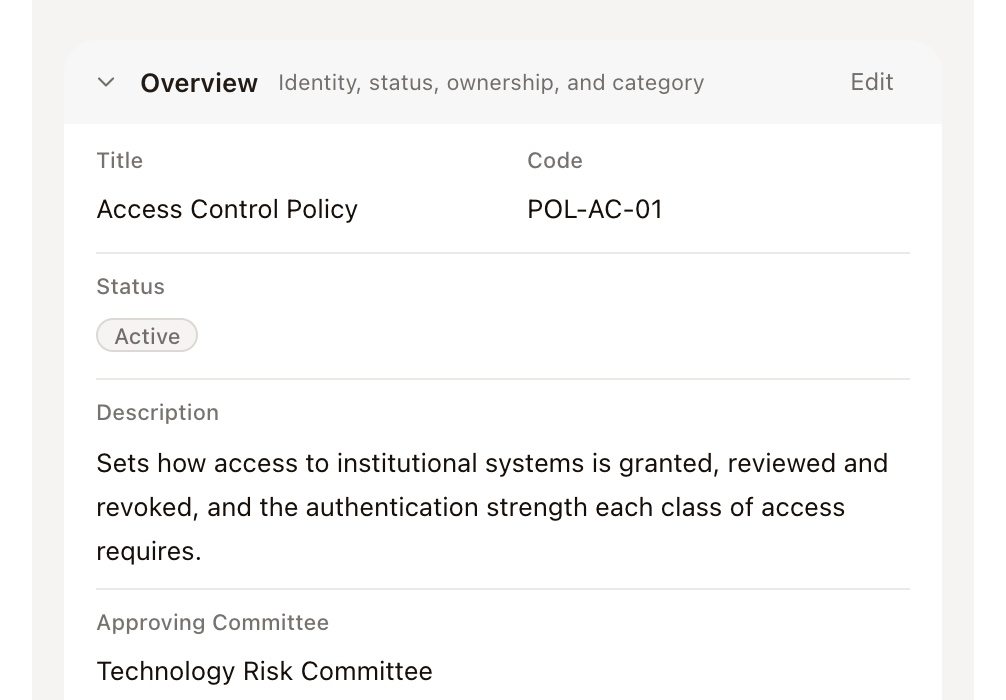
Policies, standards, procedures and guidelines, each with an owner, an approving committee and a review date, and a set approval.
Committees and decisions
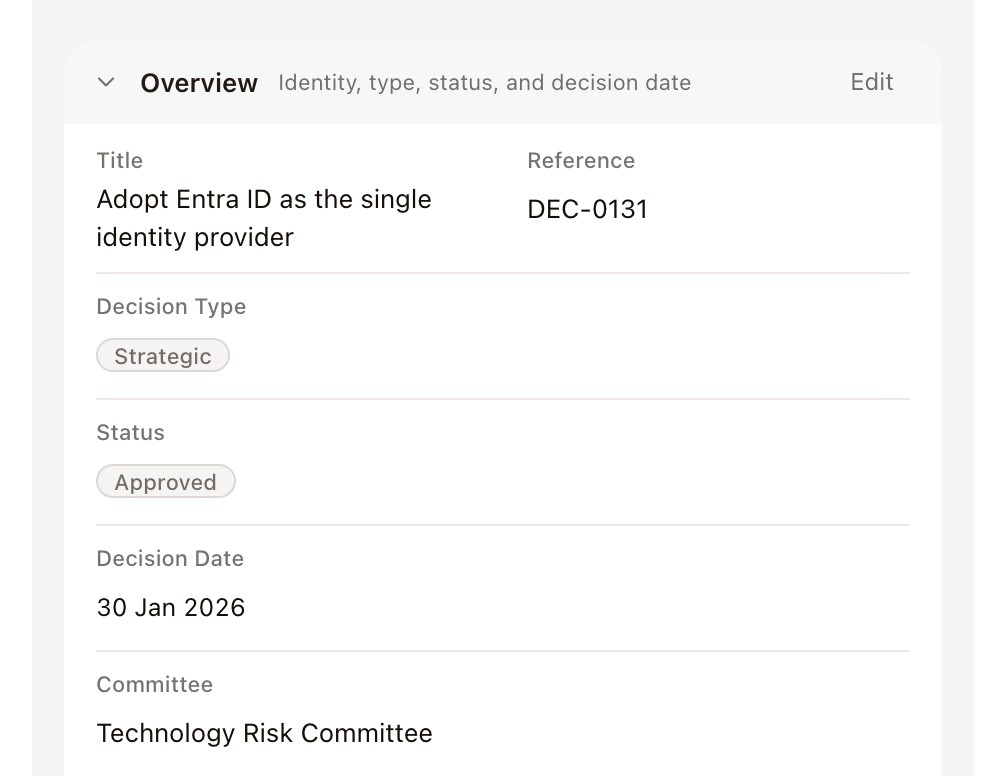
Every decision keeps its reason, the authority it was made under and the meeting it came from. Once ratified, it's locked.
Assessments and issues
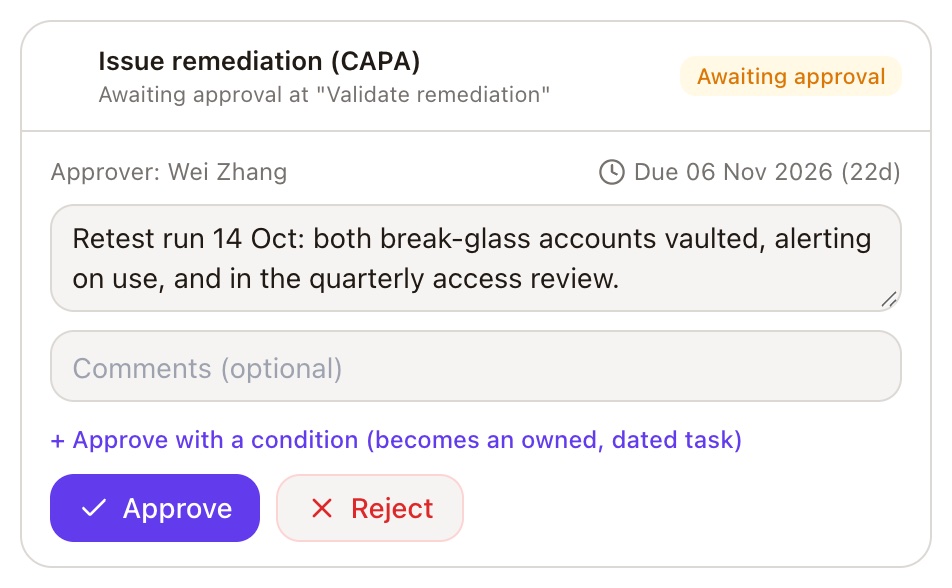
Evidence is fingerprinted when it's uploaded, and a finding only closes once its fix has been checked.

What the auditor will ask for, already on the record.
Closed means done
A finding closes only after its fix is checked.
One control, many frameworks
A control that meets three frameworks is kept once, not three times.
Decisions you can explain
What was decided, why and on whose authority is on the record, and can't be quietly changed.
Governance shouldn't be something you prepare for. It should be how the work gets done.
You don't need a new compliance programme to start.
Built inside your Microsoft 365. Your data. Your controls. Your evidence.
Less. Evidence is attached to the assessment answer it supports when it's collected, with who provided it, when, and a fingerprint taken at upload. The file stays in your SharePoint.