For the CIO
Lead with complete context. Every decision connected.
One living model across strategy, investment, architecture and delivery, so you can prove what moved the needle.
Portfolio predictability
+32%
Cloud-first mandate approved
Full lineage captured · CIO
30 to 50%
less time on reporting
20 to 40%
higher portfolio predictability
10 to 25%
better investment realisation
The challenge
You know these walls.
Roadmaps drift
Decisions lose their context as delivery evolves.
Reporting takes weeks
Every picture of the estate is a manual rebuild.
Audit is hard to prove
Risk, compliance and evidence live in disconnected registers.
Business-IT misalignment
Priorities and value are argued, not shared.
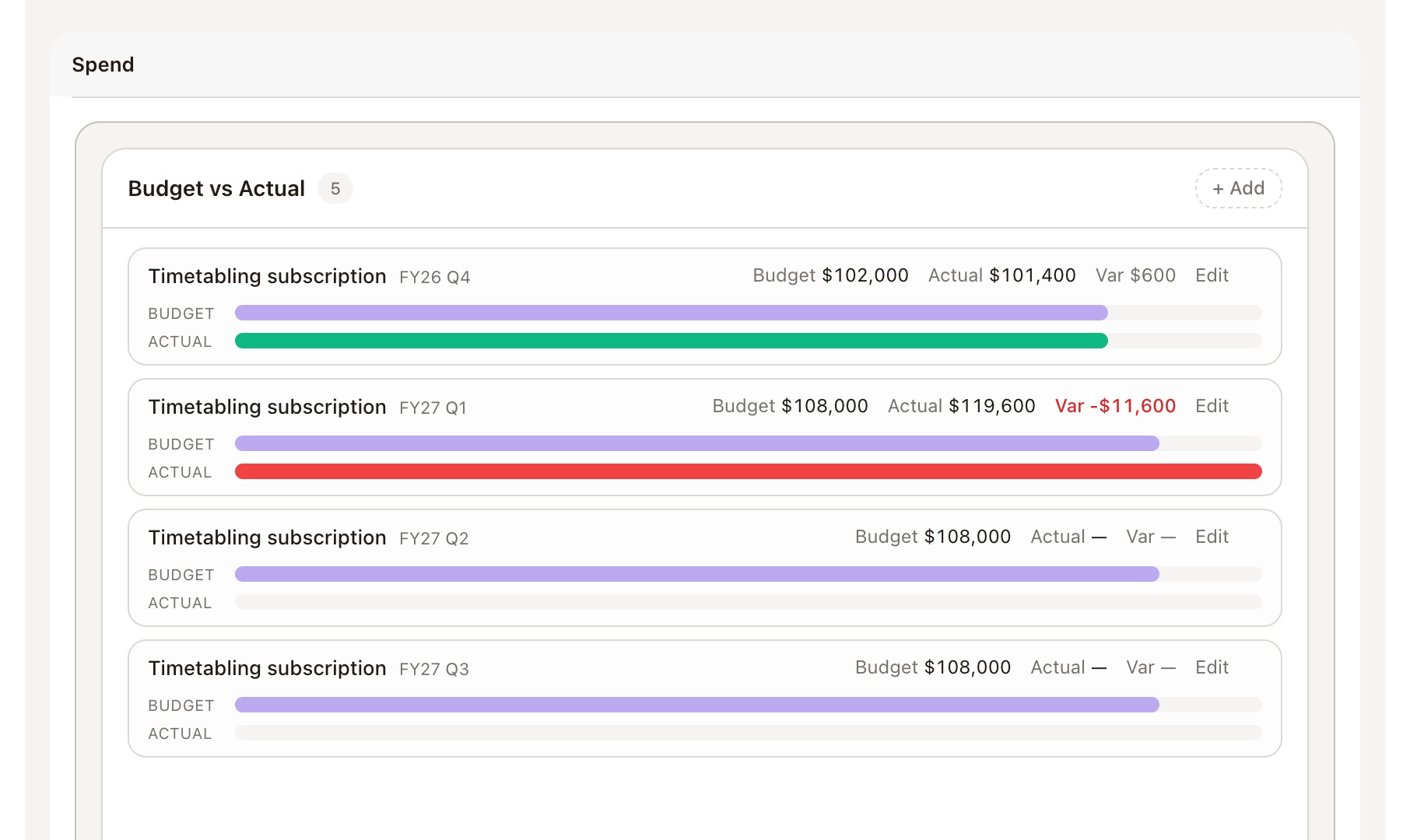
Prove value
Trace outcomes to the decisions that created them.
- Outcomes traced back to intent and assumptions
- Benefits tracked live, not reconstructed
- Board-ready reporting straight from the model
Prioritise investment
Decide with the full picture, before commitment.
- Impact, risk and capacity visible at intake
- Portfolio trade-offs made on shared evidence
- Rationale kept on every reprioritisation
Stay audit ready
Evidence accumulates as work happens.
- Controls and obligations linked to decisions
- Continuous compliance visibility
- A complete audit trail by design
“AlignX gave us the line of sight we had been trying to build for years. We can now prove the value of our initiatives and make better calls, earlier.”
CIO, Australian Government Agency
What CIOs ask us.
What tools does AlignX replace, and what stays in my estate?
AlignX replaces your PPM (Planview, Clarity, MS Project, ServiceNow SPM), your EA tool (LeanIX, Ardoq, Sparx, Bizzdesign), and in most cases your standalone APM and vendor risk tools. It integrates with the tools that stay: ITSM, CMDB, Jira, finance, HR and identity. One platform where you had three to five.
What is the total cost of ownership story once we consolidate?
Direct licence savings of 30 to 50 percent are typical when PPM, EA and GRC consolidate into AlignX. Bigger saving is people time: fewer integrations to build, fewer reports to reconcile, fewer training curves. Because AlignX runs inside your Microsoft Power Platform environment with Entra ID, there is no separate identity, hosting or infrastructure cost.
How is AlignX different from another PPM that ends up as a status factory?
PPM captures what teams did. AlignX connects that to strategy above, and architecture, risk and resourcing beside it, so the portfolio view is decision-ready. You approve, reprioritise and rebalance in AlignX. Execution stays in Jira or wherever your teams work. AlignX orchestrates, it does not force teams to change tools.
Can I forecast portfolio outcomes with AlignX, or only report them?
Forecast. Resource commitments, risk exposure, architecture dependencies and financial burn run against a live model. You can scenario test "what happens to Q3 if we pull forward the cloud migration" before you commit. Portfolio predictability lifts 20 to 40 percent because trade-offs are made before delivery hits the wall.
How do we roll this out and consolidate without an 18-month platform programme?
Standard rollout is 8 to 12 weeks to a working enterprise model, starting with the highest-leverage domain for your organisation. Tool consolidation happens in waves over the next two to three quarters as you decommission the tools AlignX replaces. No big bang, no separate identity build.
Where does AlignX fit next to Copilot, Power BI and our Microsoft investment?
AlignX maximises the Microsoft investment you already have. Copilot reasons over connected enterprise data instead of fragments. Power BI dashboards run off one source of truth instead of six. Because AlignX is built inside Microsoft 365 and the Power Platform, integration is native, not bolt-on.
What does AlignX do that a standard SPM or PPM tool cannot?
AlignX is enterprise alignment plus architecture plus risk plus vendor plus resource, in one model. Standalone SPM and PPM tools stop at portfolio. AlignX connects portfolio decisions to the architecture they change, the risks they carry, the vendors they depend on and the capacity they consume. That is the decision context standalone tools cannot give you.
See where you stand.
Ten minutes, twenty-one questions, an instant maturity score and your Fragmentation Index.