For the PMO & Portfolio Leader
Deliver what you commit. Strategy to delivery in one live view.
Portfolio, delivery, resources and value in one living model, so you can prioritise with confidence and drive better outcomes.
Better on-time delivery
+30%
Portfolio rebalance approved
Full lineage captured · PMO Leader
20 to 40%
better on-time delivery
30 to 50%
less reporting effort
15 to 30%
better capacity utilisation
The challenge
You know these walls.
Overloaded portfolios
Portfolios are overloaded and priorities change constantly.
Blind decisions
Decisions are made without full visibility of impacts, risks or capacity.
Capacity guessed
Capacity is guessed, not known, which leads to overcommitment.
Slow reporting
Reporting takes too long and trust is low.
Shape demand
Demand triaged and linked to strategy and capacity.
- Conflicts and duplicates flagged at intake
- Match demand to real capacity across teams and time
- Prioritised against objectives, so the portfolio reflects reality
Better prioritisation
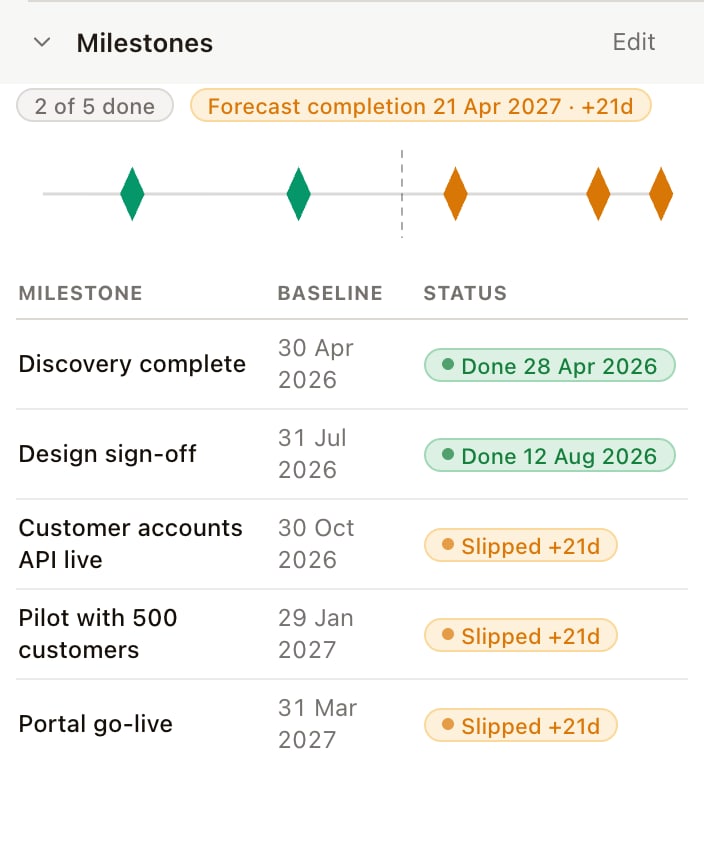
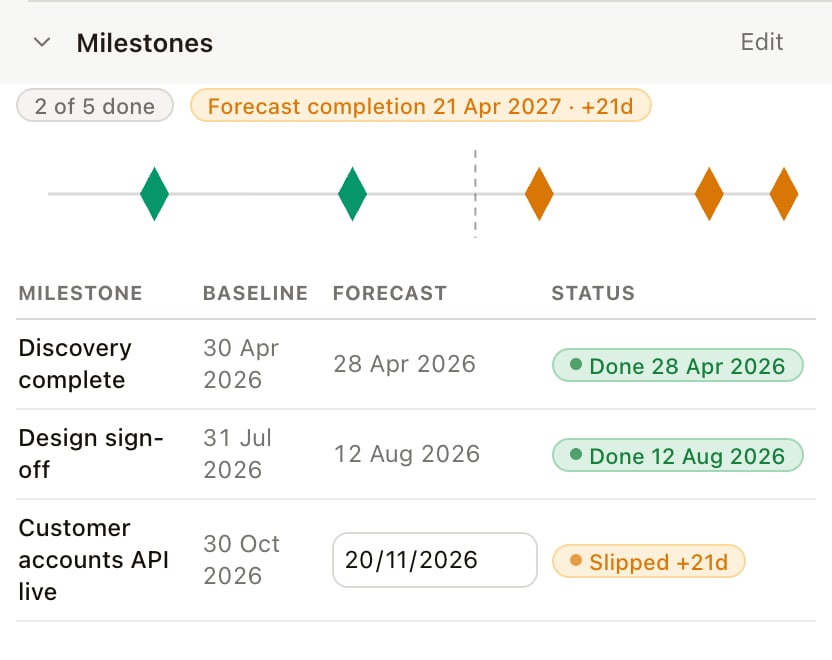
See value, risk and dependencies to make better trade-offs.
- One source of truth for initiatives, investments and outcomes
- Risks and issues in the context of strategy and delivery
- Rationale kept on every reprioritisation
Value delivery
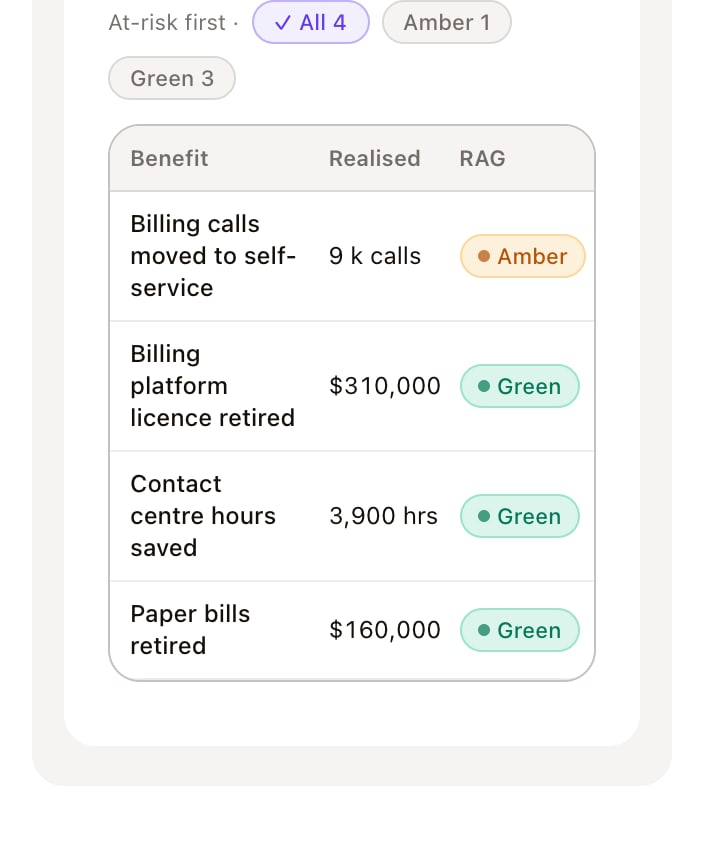
Track benefits realisation and outcomes, not just outputs.
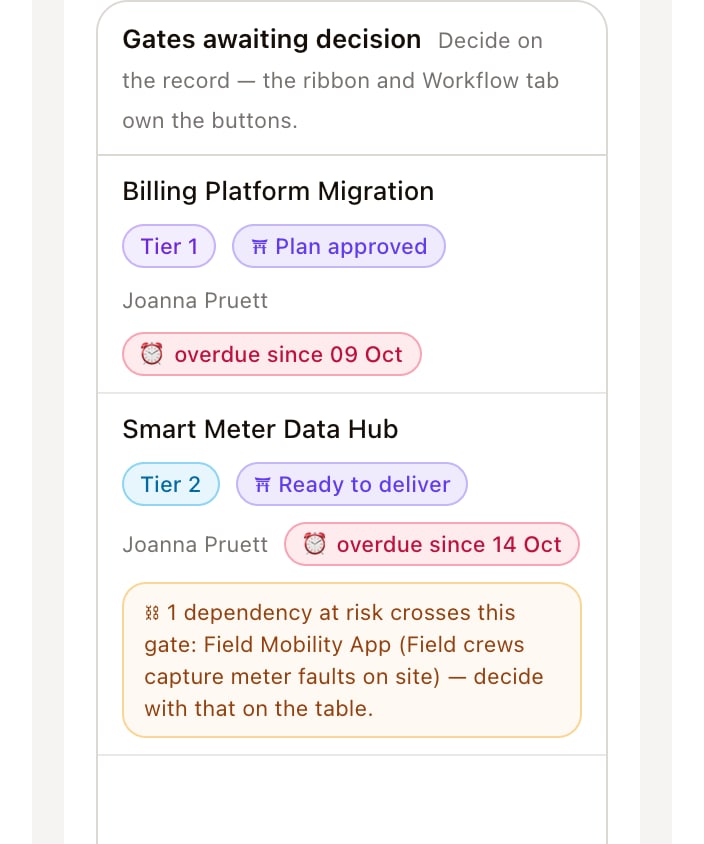
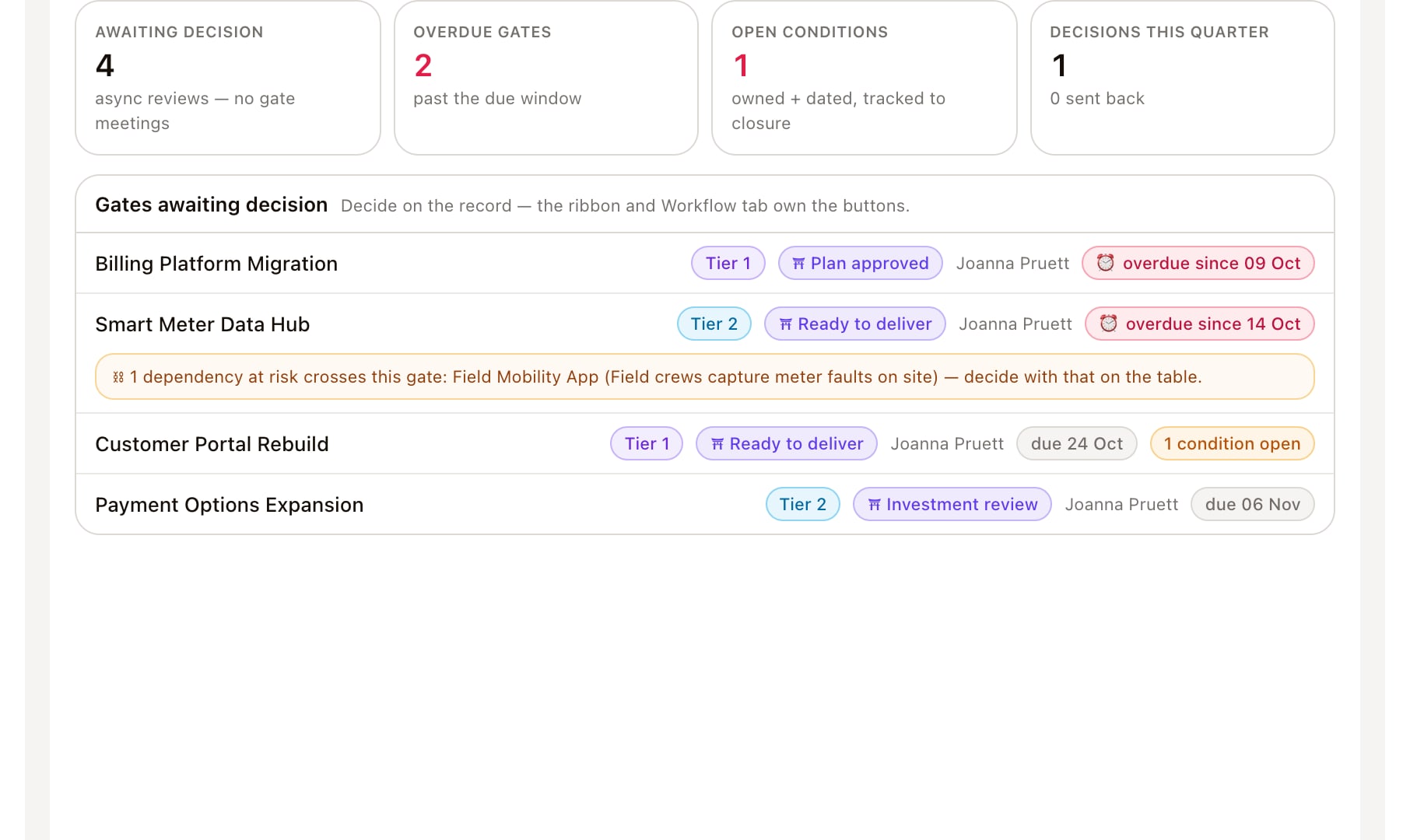
- Stage gates and approvals on the record
- Real-time insight reduces manual effort and builds trust
- Deliver value, not just outputs
“AlignX gave us one live view of our portfolio, capacity and delivery. We make better trade-offs and our initiatives actually deliver the outcomes we promised.”
PMO Director, Australian Government Agency
What PMO Leaders ask us.
What PPM and adjacent tools does AlignX replace for the PMO?
AlignX replaces your PPM (Planview, Clarity, MS Project, ServiceNow SPM), your governance and reporting spreadsheets, your OKR or strategy tracker, and often your standalone benefits tool. It integrates with Jira, ServiceNow ITSM and finance systems. Your PMO runs off one platform instead of three plus a spreadsheet ecosystem.
Why move from a dedicated PPM to AlignX?
Because PPM stops at project data. AlignX connects portfolio to strategy above and to architecture, risk and resources beside it. Your PMO stops being the reporting shop and becomes the portfolio decision partner. Reporting effort drops 30 to 50 percent because status is a byproduct, not a task.
Can I run stage-gate governance in AlignX?
Yes. Configurable workflows support any stage-gate model (5-gate, 7-gate, custom). Every gate has evidence, approvers and decisions captured in the flow, so audit trails are automatic. You can run lightweight gating for agile portfolios alongside formal gates for regulated programmes in the same platform.
How does AlignX handle mixed agile and waterfall portfolios?
Native. Portfolios can contain waterfall projects, agile programmes and continuous product teams in the same view, each with its own cadence. Roll-ups are automatic. You get one portfolio truth without forcing teams into one delivery method.
What does the PMO stop doing after we roll this out?
The manual status report cycle collapses. Fewer steer co decks to build, fewer chase-ups for updates, no more reconciling three different spreadsheets. Reporting effort drops 30 to 50 percent. Your team spends that time on portfolio shaping, dependency management and benefits.
How does AlignX integrate with Jira, ServiceNow ITSM and our CMDB?
Native, two-way integrations. Delivery teams work in Jira and AlignX syncs progress, effort and status. ITSM and CMDB integrations keep application, service and asset data current. Your PMO gets connected reporting without asking delivery teams to duplicate data.
How does AlignX handle CapEx, OpEx and capitalisation reporting?
Financial fields on every initiative and work package feed automatic CapEx/OpEx splits and capitalisation reports. You can trace spend from an approved investment through to the delivery activity that consumed it, which finance teams love and auditors accept.
See where you stand.
Ten minutes, twenty-one questions, an instant maturity score and your Fragmentation Index.