For the transformation director

One transformation. Every initiative aligned. Real outcomes delivered.

Changes, impacts, gates, delivery health and money in one model across the whole programme, so the steer co reads records, not readouts.

In one sentence

AlignX gives the transformation director every initiative, dependency and benefit on one model, so the programme can be reset on evidence rather than on slides.

Written forTransformation DirectorChief Transformation OfficerProgramme Director

The solution

What the transformation has to hold.

The change record

What the change acts on, its version, its status and its why.

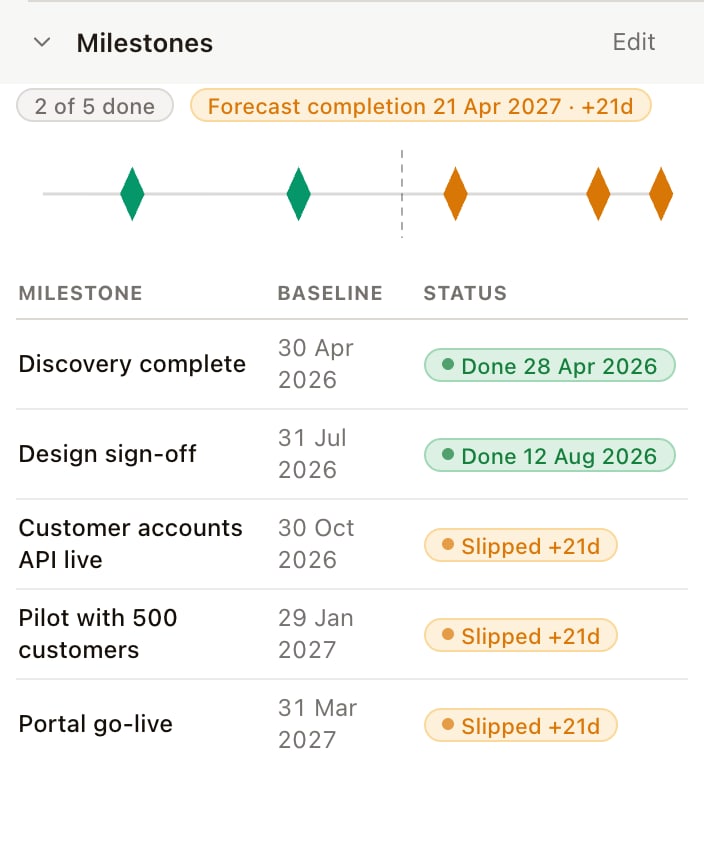
A typed record with the sequence around it, not a line in a plan. Version 3.00, ready to execute, the reason written down.

See the business analysis product

Impact by layer

Everything a change touches, named before the decision.

Business contexts, capabilities, organisations, applications, interfaces, technology, vendors, risks. On the change record.

See the architecture product

Gates and conditions

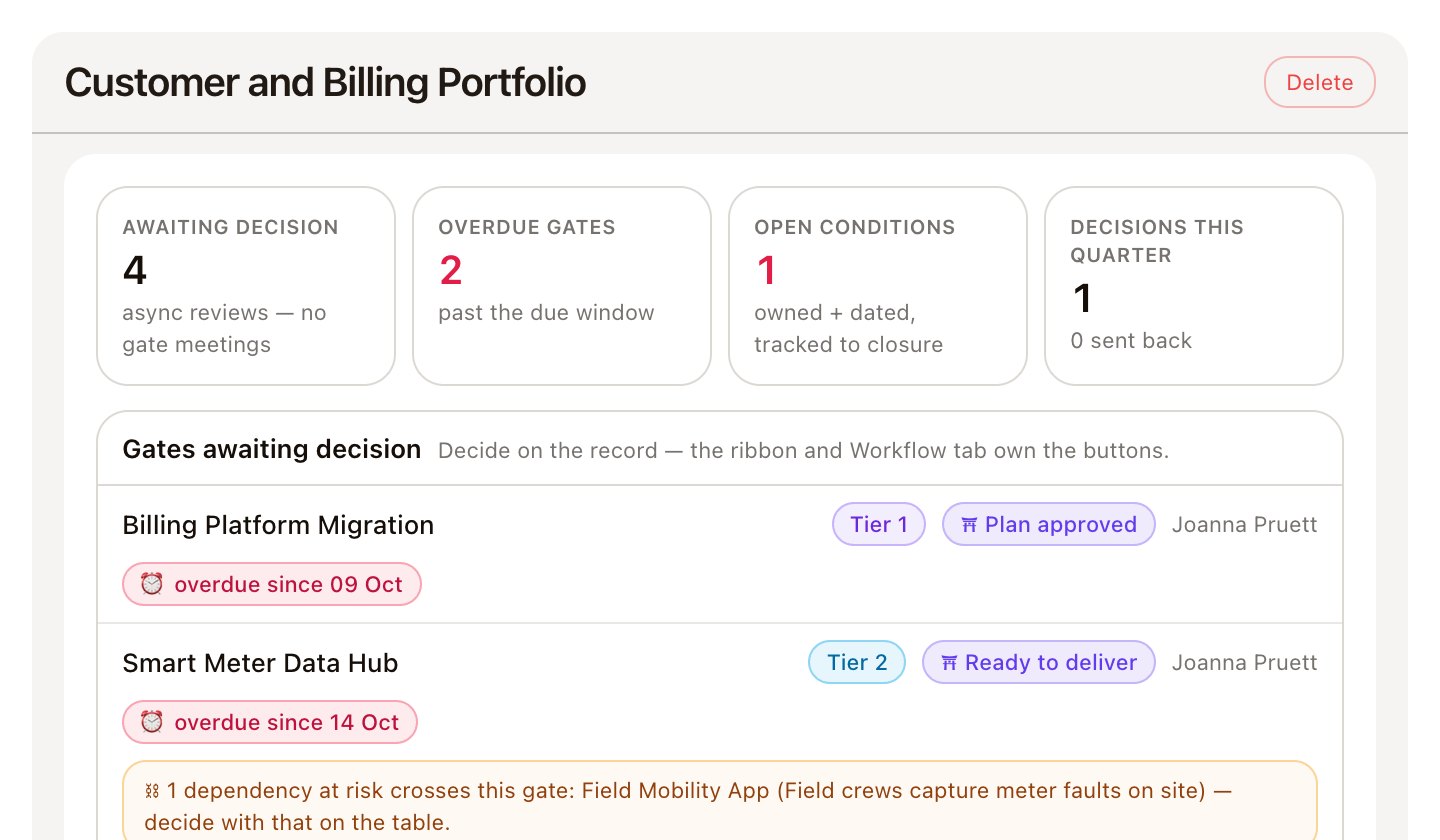
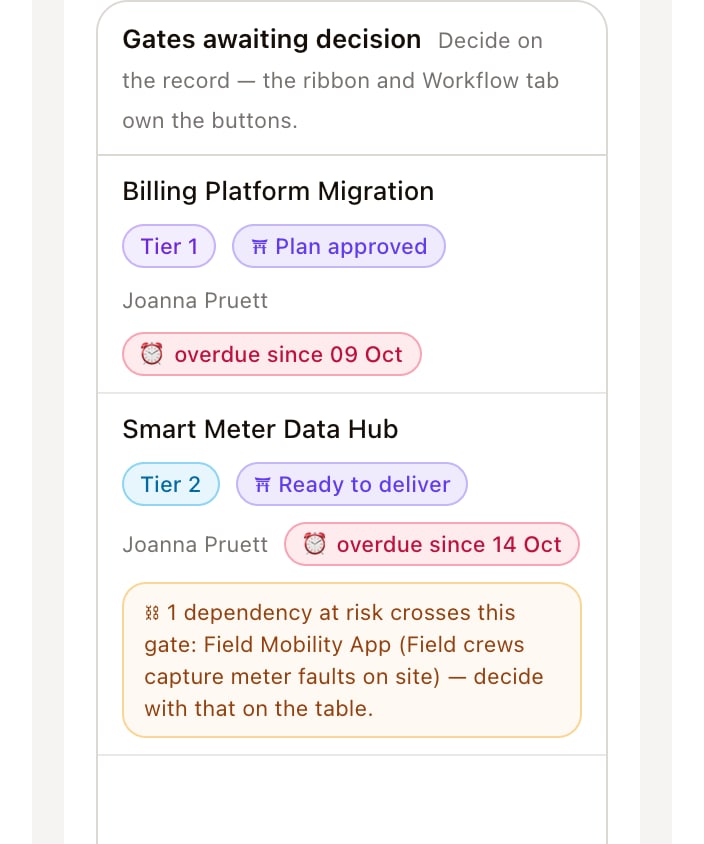
Every gate carries its approver, its dates and its conditions.

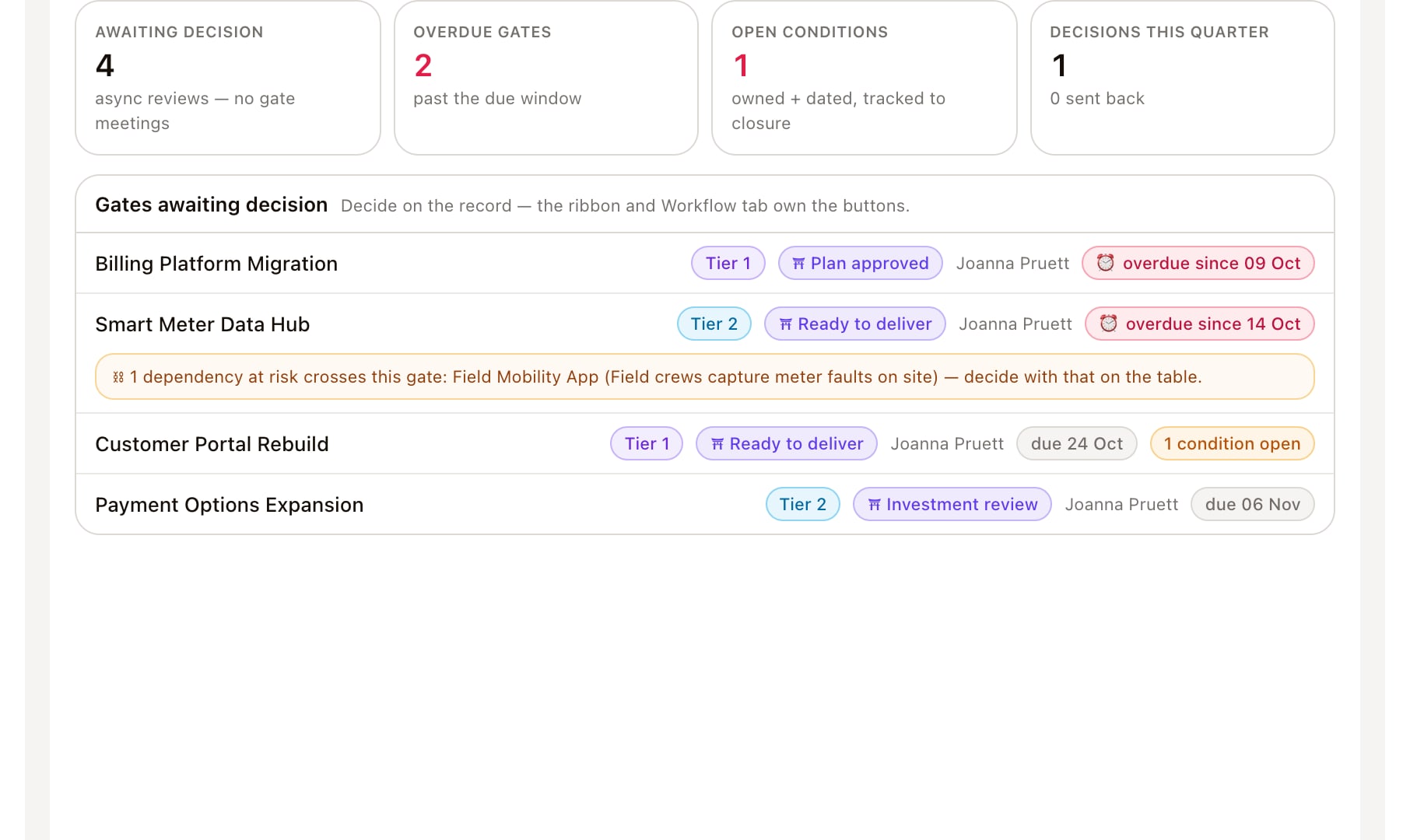
Two gates awaiting decision, one past its due window, dependencies inside the decision row. The next gate checks the last one.

See the portfolio product

Delivery health

RAG earned from published check-ins, worst of schedule, budget and scope.

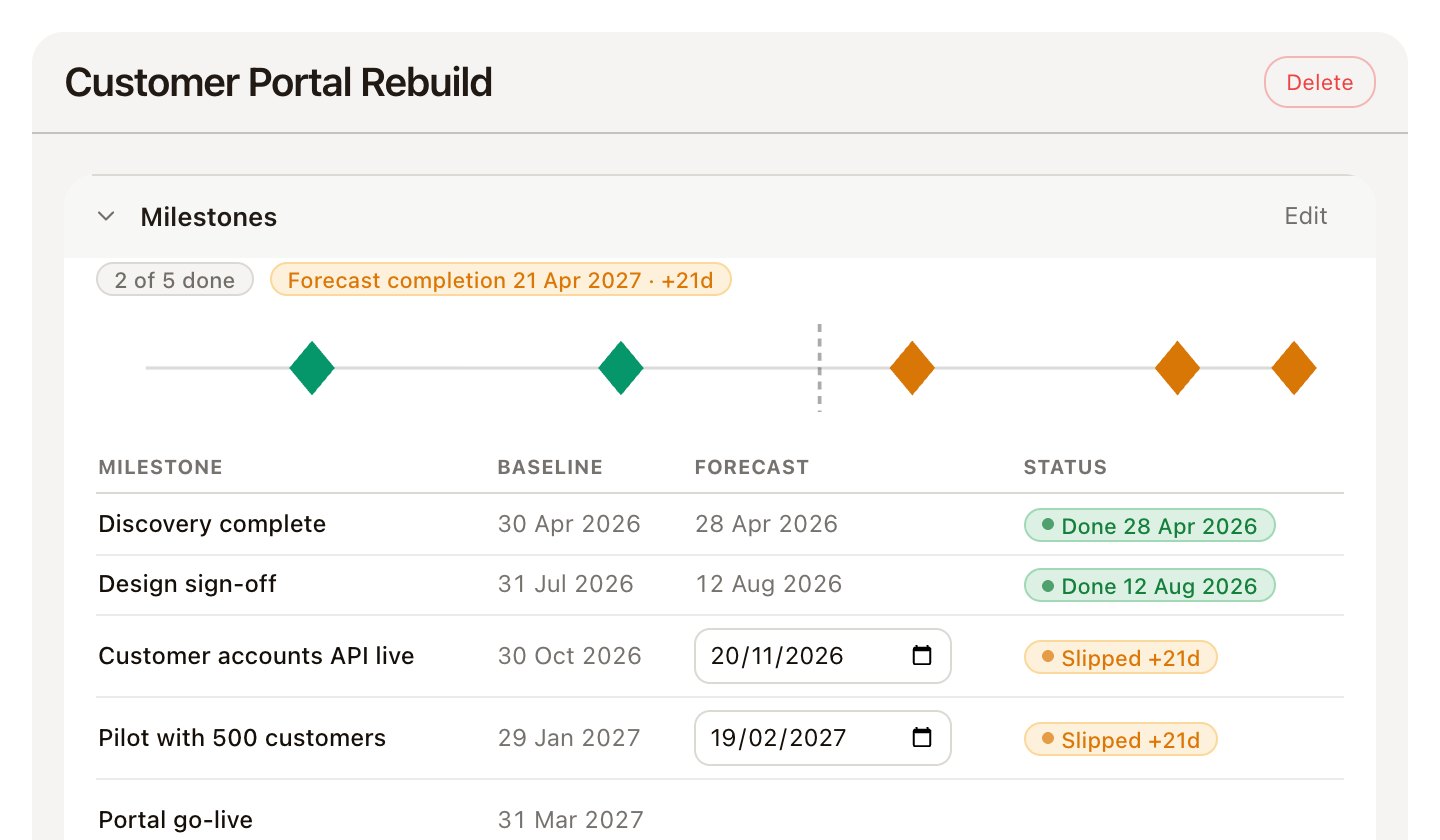
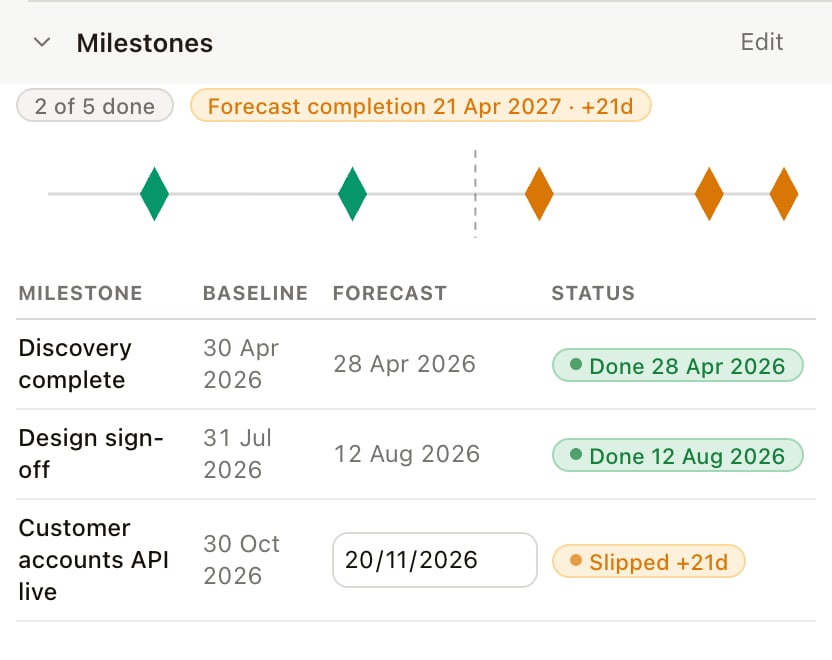
Timetabling slipped its design gate by three weeks and the intake peak is now inside the build window. Recorded, with the call.

See the report builder

Money and variance

Budget, actuals, forecast and variance by programme, against the envelope.

Identity Modernisation, Student Journey, Research Platforms, Finance Modernisation and eight more, each line rolled up from its own investment's stamped headlines. Nobody retyped a number.

See the portfolio product

Capacity to absorb

Firm load per person per month, against everything already promised.

One over, nine healthy, three under this month, and a further 1.5 FTE of demand nobody is staffed for. Change saturation stops being a feeling and becomes a number you can point at.

See the resource product

Day to day

What changes.

Without AlignXWith AlignX
The steer coStatus readouts from six workstreams, reconciled the night before.
The steer coBenefits, risks, decisions pending, dependencies and burn, connected and live.
The mid-programme resetScope and benefits change; the plan is rebuilt by hand.
The mid-programme resetVersioned changes, modelled against benefits and capacity, reset in a gate.
The dependencyDiscovered at the gate, or after it.
The dependencyIn the decision row before anyone sits down.
The impact questionWhat does this change touch? A fortnight.
The impact questionNamed by layer on the change record, today.
The benefits reviewThe case was approved, then nobody returned to it.
The benefits reviewActuals against the case that won the money.
The capacity clashThree programmes hit the same team in the same month.
The capacity clashFirm load per person across every portfolio, one heatmap.

The AlignX technology

Nothing new to govern.

  • Runs inside Microsoft 365In your tenant, on your Dataverse. Nothing leaves it.
  • Entra ID governs who sees whatThe roles you already run decide access. No second directory.
  • Australian data residencyYour Dataverse environment sits in an Australian region. Purview and retention policies apply as they do everywhere else.

How AlignX sits inside Microsoft 365

Questions

What transformation directors ask us.

What programme, EA and governance tools does AlignX consolidate for transformation?

AlignX replaces your PPM, your standalone EA tool, your benefits tracker, your risk and issue registers, your dependency mapping tool and your governance spreadsheets. Everything the programme needs (strategy, portfolio, architecture, risk, resources, benefits, vendors) sits in one connected platform. Transformation stops living across seven tools.

How does this consolidation save cost and effort during transformation?

Programme teams stop building the reporting layer and start managing outcomes.

How does AlignX handle the mid-programme reset when scope, benefits or timeline change?

Version-controlled plans, benefits maps and business cases mean you can propose a reset, model its impact against benefits and capacity, and reset in a governed way. Nothing gets orphaned. Full lineage means auditors see why the change was made and what was approved.

Can I track benefits realisation, not just milestone delivery?

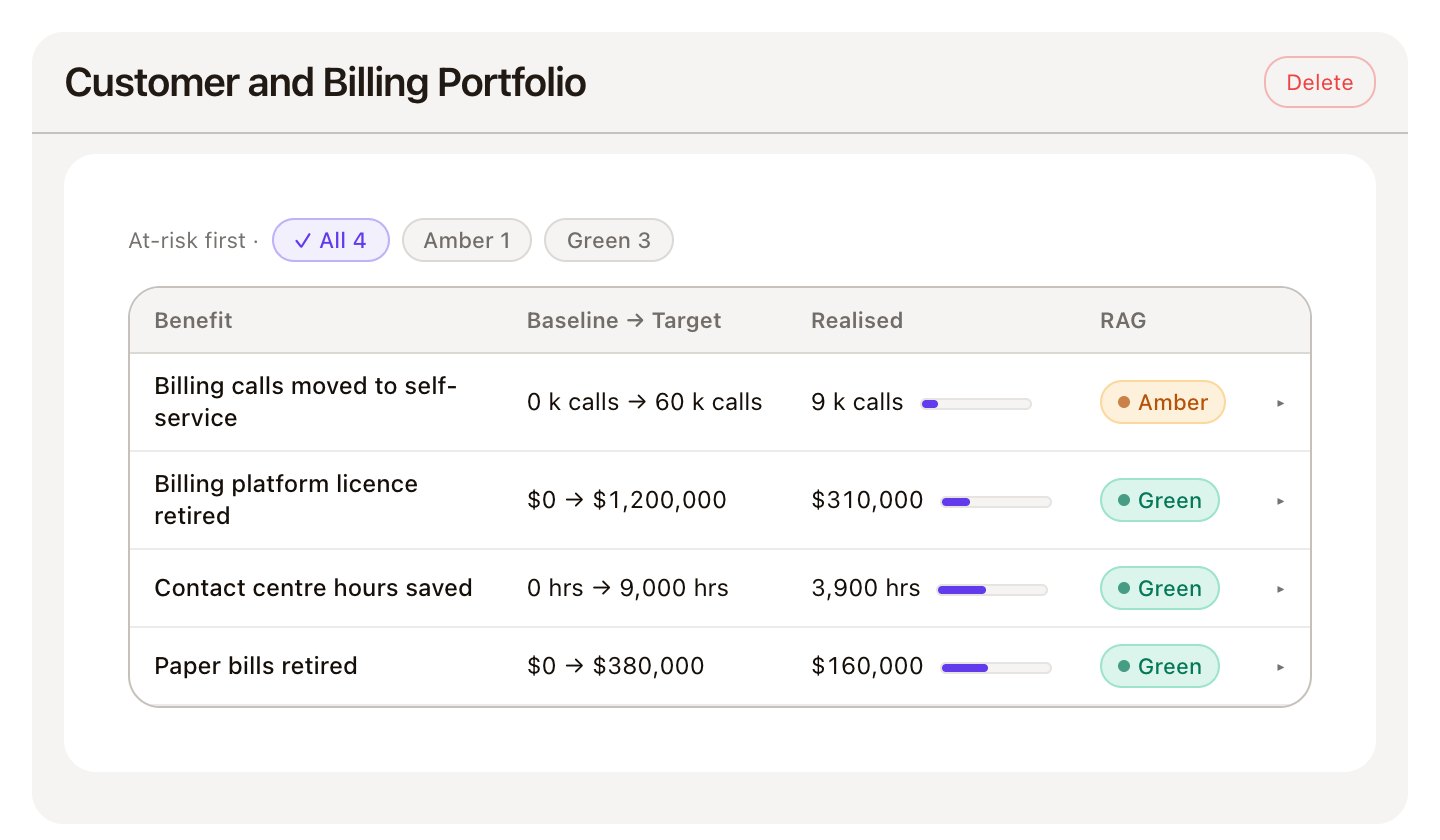
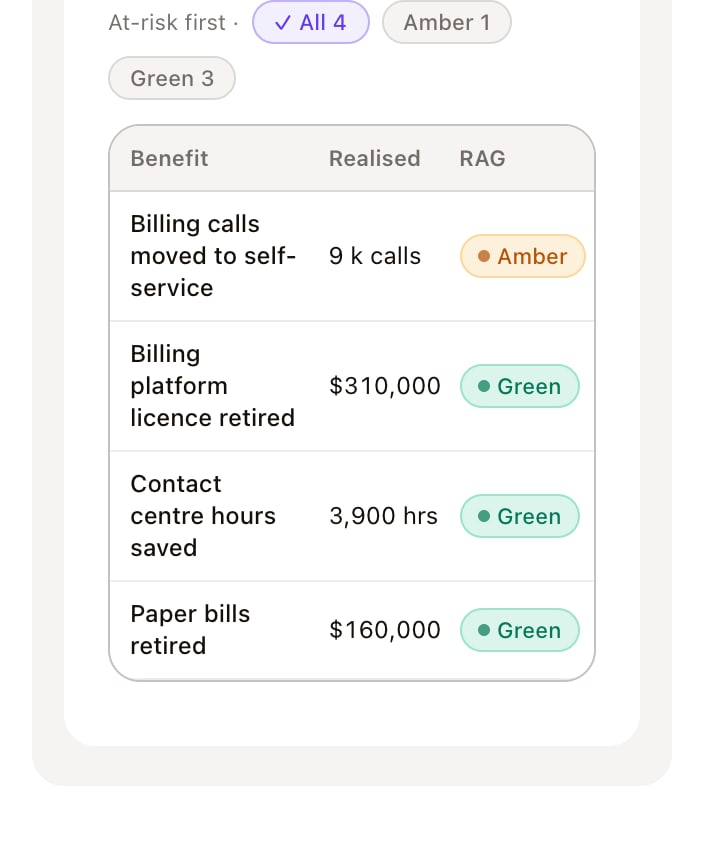
Yes, this is core. Every benefit has a baseline, target, owner, measurement method and realisation curve. AlignX tracks actuals against plan and flags benefits at risk before they slip. Boards get benefits realisation reporting they can trust.

How does AlignX connect transformation to the operating model that has to absorb the change?

The capability model and operating model sit in the same graph as the transformation programme. You see which capabilities each initiative uplifts, which teams need to be ready, and where absorption capacity is stretched. Change readiness stops being a separate workstream and becomes a portfolio input.

What does AlignX give me for exec steering committees that I do not get today?

A live steer co view: benefits, risks, decisions pending, dependencies, resource conflicts and capital burn, all connected. Steer cos move from status readouts to decisions, which typically halves meeting length and doubles the useful decisions made.

How do we handle programme-level risk, issue and dependency management across workstreams?

Enterprise risk, issue and dependency registers roll up from workstream to programme to portfolio automatically. Cross-workstream dependencies are visible with owner and status. You stop discovering critical dependencies at the last steer co.

See where you stand.

Ten minutes, twenty-one questions, an instant maturity score.