For the executive

Better enterprise decisions. Better business outcomes.

Strategy, investment, risk, money and outcomes in one model inside your Microsoft tenant, so the board pack is a live view and every approval keeps what it was decided on.

In one sentence

AlignX gives the executive team one live view from strategic intent to proven outcome, so any significant decision can be traced to the assumptions that produced it and the result it delivered.

Written forChief Executive OfficerChief Operating OfficerChief Information OfficerChief Digital OfficerChief Strategy OfficerChief Transformation Officer

The solution

What the executive reads.

Board reporting

Thirteen investments, the approved envelope, and what it will really cost.

A live dashboard on the portfolio: thirteen investments, $14.06m approved, $14.475m forecast at completion. Nobody rebuilt it the week before.

See the report builder

Strategy to outcome

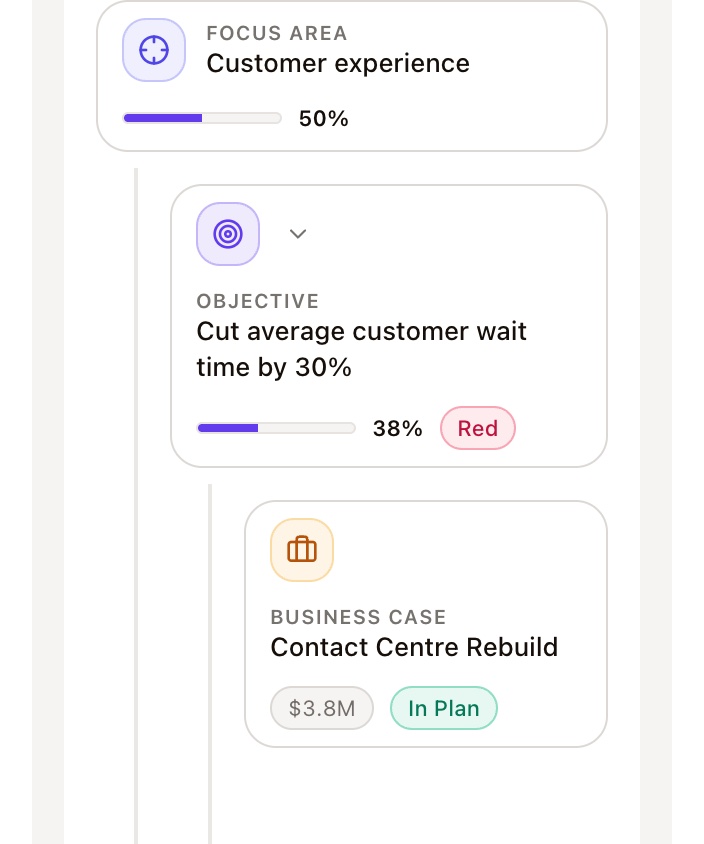
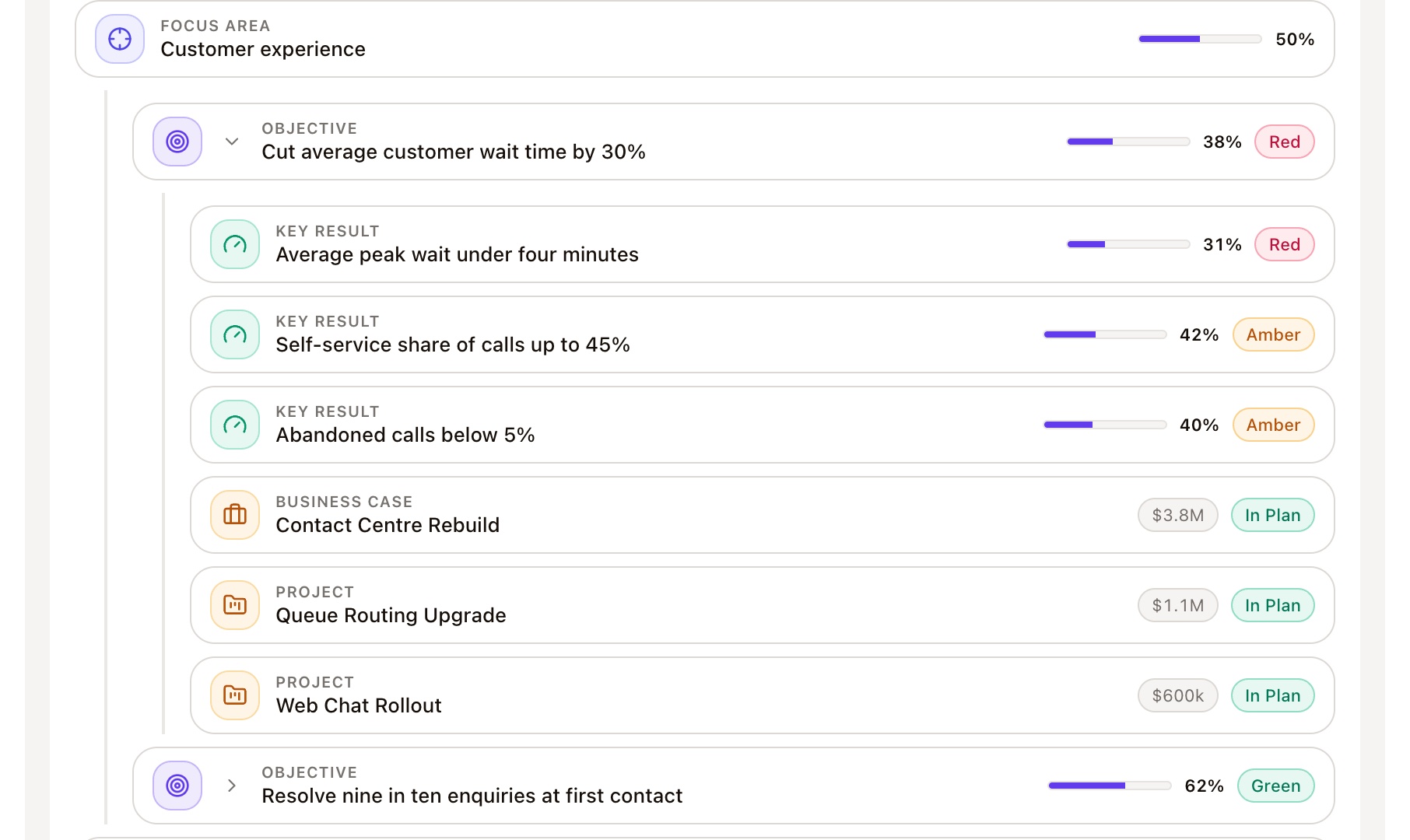
Plan, focus area, objective, key result. One line to the amber.

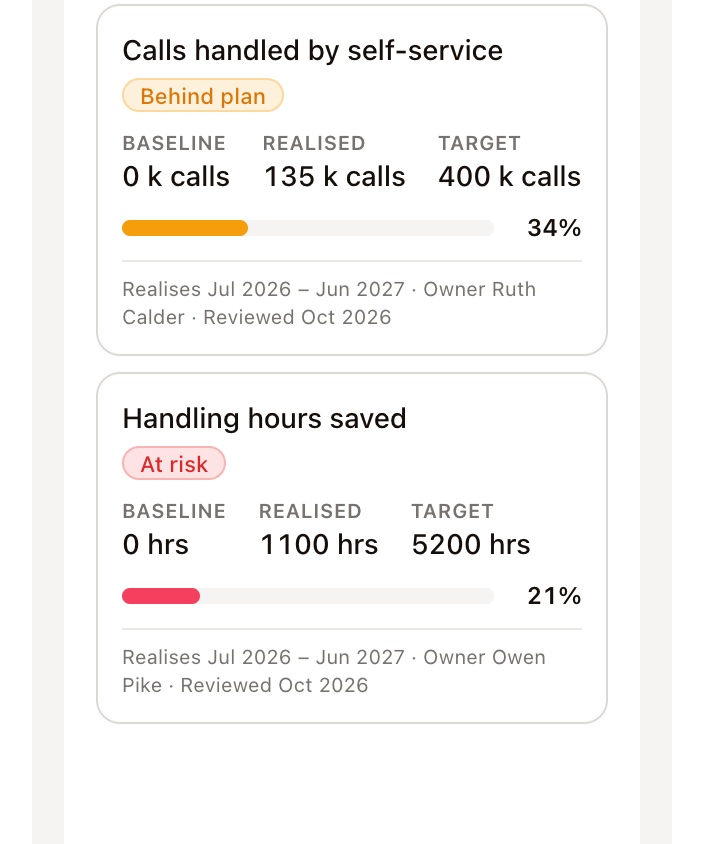
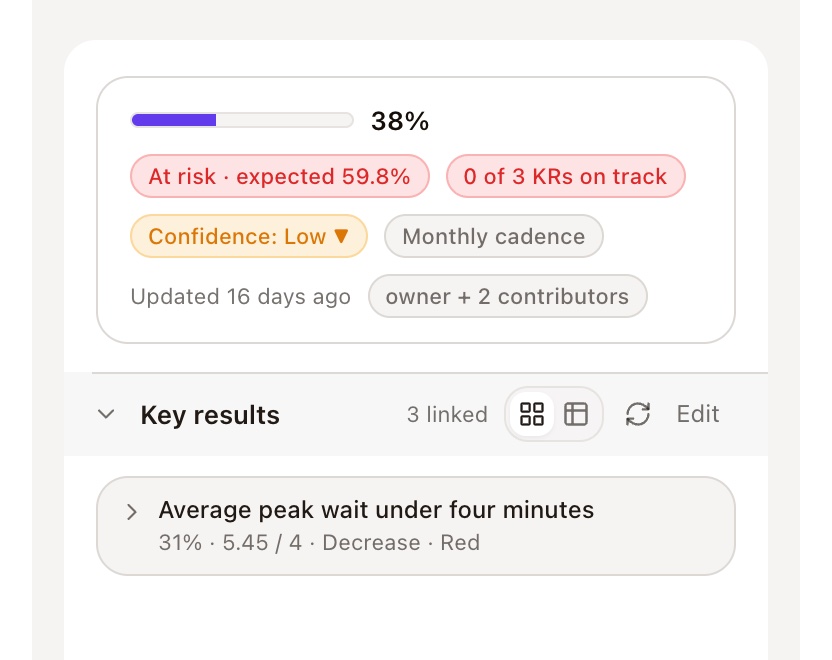
Four of twelve key results at risk on one objective, and the investments that carry it, on the same screen.

See the portfolio product

Money and variance

Budget, actuals, forecast and variance, rolled up from each investment.

Twelve programmes against a fifty million dollar envelope, each line rolled up from its own projects, out of the records that carry the numbers. One write path, no reconciliation meeting.

See the portfolio product

Capacity to deliver

Firm load per person per month, against the plan we approved.

One over, nine healthy, three under this month, and a further 1.5 FTE of demand nobody is staffed for. The answer to whether we can absorb this, before the answer is a slipped date.

See the resource product

Enterprise risk

Every risk with its status, source and category, connected to what carries it.

Treating, assessed, monitoring or closed. Architecture review, audit finding, self assessment or incident. Not a heat map on a slide.

See the GRC product

Decisions pending

The decisions still open, and what deferring one already cost.

Five sitting under review. Two carrying a waiver to 2027 on a database that is already end of life, which is what doing nothing looks like once it is written down.

See how it works

Day to day

What changes.

Without AlignXWith AlignX
The board packAssembled from six systems over two weeks, out of date by the meeting.
The board packA dashboard on the record, opened live in the room.
The approvalCases argued from decks; capacity and architecture are someone else's problem.
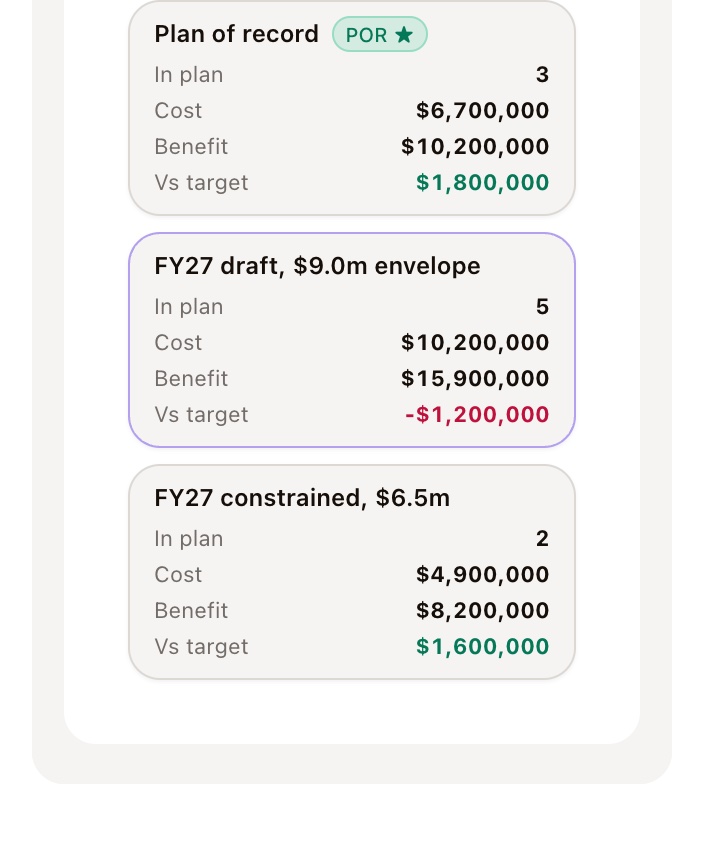
The approvalThe score, the scenario against the envelope and the impact, in one view.
The outcome questionWhich investments moved the objective? A guess.
The outcome questionThe cascade from plan to key result to investment, one line.
The risk reportA heat map on a slide, three weeks old.
The risk reportThe register, scored and connected, opened live.
The reprioritisationPriorities move and the original rationale goes with them.
The reprioritisationThe decision record keeps what it was decided on.
The budget cutWhich initiatives to stop? A week of meetings.
The budget cutThe ranked cohort against a smaller envelope, drawn in minutes.

The AlignX technology

Nothing new to govern.

  • Runs inside Microsoft 365In your tenant, on your Dataverse. Nothing leaves it.
  • Entra ID governs who sees whatThe roles you already run decide access. No second directory.
  • Australian data residencyYour Dataverse environment sits in an Australian region. Purview and retention policies apply as they do everywhere else.

How AlignX sits inside Microsoft 365

Questions

What executives ask us.

What tools does AlignX replace, and what does it integrate with?

AlignX replaces your PPM, enterprise architecture, ERM, GRC and standalone vendor tools with one Enterprise Alignment and Decision Intelligence Platform. It integrates with the systems that stay: ITSM, CMDB, Jira, finance and HR. Most executives consolidate three to five overlapping tools into AlignX in the first 12 months.

What does consolidating onto AlignX actually save us?

The bigger win is indirect: fewer tools mean fewer teams reconciling data, fewer training programmes, fewer integrations to maintain. Your teams stop being systems integrators and start making decisions.

What will actually change in my leadership team meetings after we adopt AlignX?

Your weekly leadership meeting stops being a status report. Because portfolio, risk, resourcing, architecture and benefits sit in one live model, the conversation moves from \"what happened\" to \"what should we do\". You approve investment shifts, resolve dependencies and make trade-off calls in the room, with lineage captured automatically for the board pack.

How do I know the numbers I take to the board are actually true?

Every metric in AlignX links back to its source: the initiative, the risk record, the resource commitment, the contract. No manual roll-ups, no reconciled spreadsheets. When your Chair asks \"how do you know\", you can drill from a board KPI to the underlying record in two clicks, in front of them.

We already invest in Power BI and Copilot. What does AlignX add?

AlignX is the connected enterprise model underneath your Microsoft investment. It maximises what you already own: Power BI dashboards reason over one source of truth instead of six, and Copilot has real connected enterprise data to work with instead of fragments. You get more value from the Microsoft licences you already pay for.

How fast do we see impact at exec level, not just at PMO level?

Executives typically see the first shift within 4 to 6 weeks: a single view of portfolios by risk and status, and a live board pack.

What does my board or audit committee get out of this?

A live, evidence-backed view of strategic execution and risk, refreshed on demand rather than quarterly. Full lineage means audit and assurance conversations are shorter. Several boards use AlignX as their standing enterprise view during meetings, replacing static packs entirely.

See where you stand.

Ten minutes, twenty-one questions, an instant maturity score.