Requirements
Break the need down without losing it.
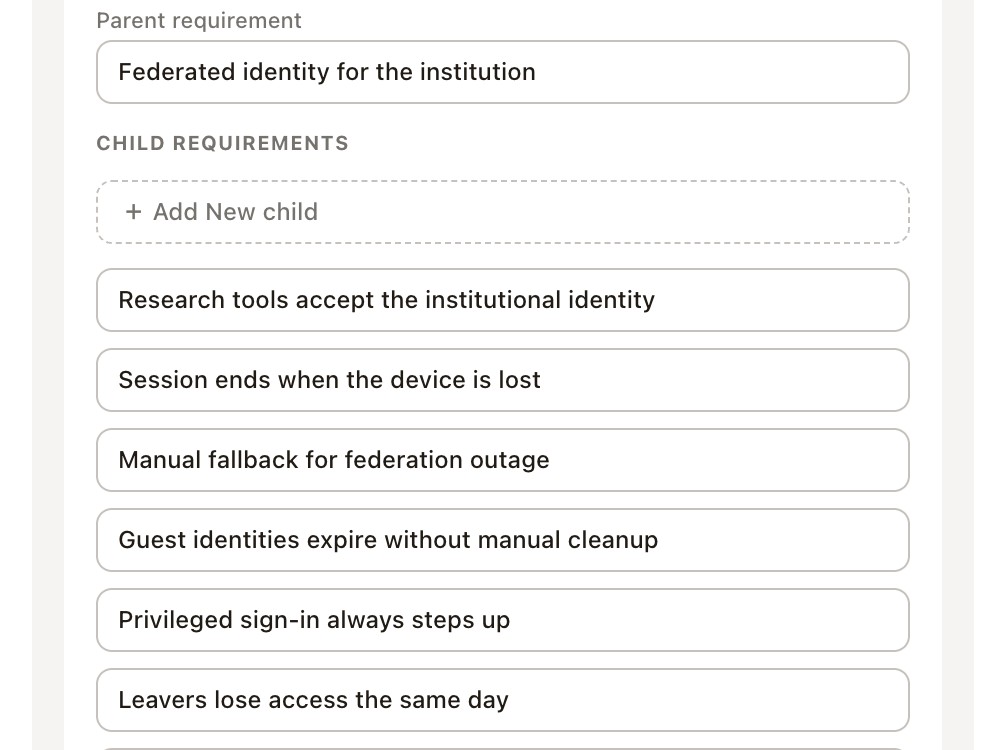
Requirements decompose from epic to detail over six levels, each typed, prioritised and owned, with its parent and children on the record.
Most requirements tools keep a backlog. AlignX connects each requirement to the business case it serves, the framework clauses it must satisfy and the acceptance criteria that define when it's done, so delivery stays connected to the reasons behind the work.

Requirements sit in documents and tickets, apart from the case that funded them and the rules they must meet, so the why is gone by the time the work starts.
The answer is in a business case nobody linked, written months before the backlog.
Compliance reads the policy, delivery reads the ticket, and nobody joins the two.
Sign-off happened in an email thread, against a document that's changed since.
So delivery builds to the ticket, not to the need.
Seven connected records, from the case that funds the work to the change it makes.
Business analysts, delivery and compliance work from the same requirement record, so the argument about scope uses the same facts.
Requirements
Requirements decompose from epic to detail over six levels, each typed, prioritised and owned, with its parent and children on the record.
Prioritisation
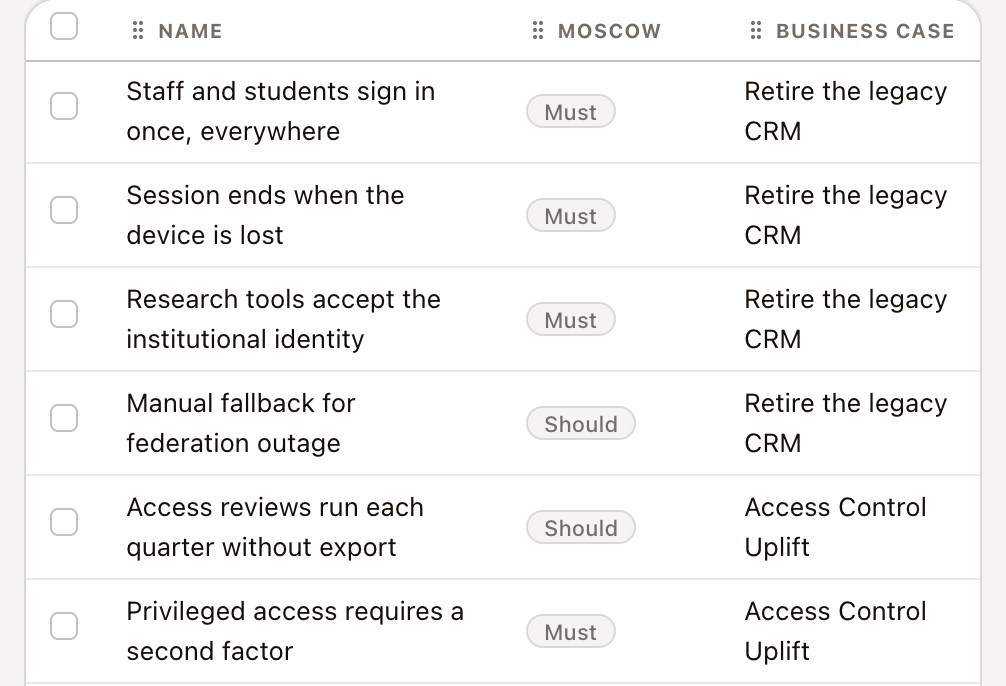
MoSCoW on a board you drag requirements across, alongside urgency, so must-haves and won't-haves are a view, not a spreadsheet debate.
Acceptance and scope
Acceptance criteria as ordered given-when-then statements with a test method, and scope, assumptions and constraints as rated records.

Compliance
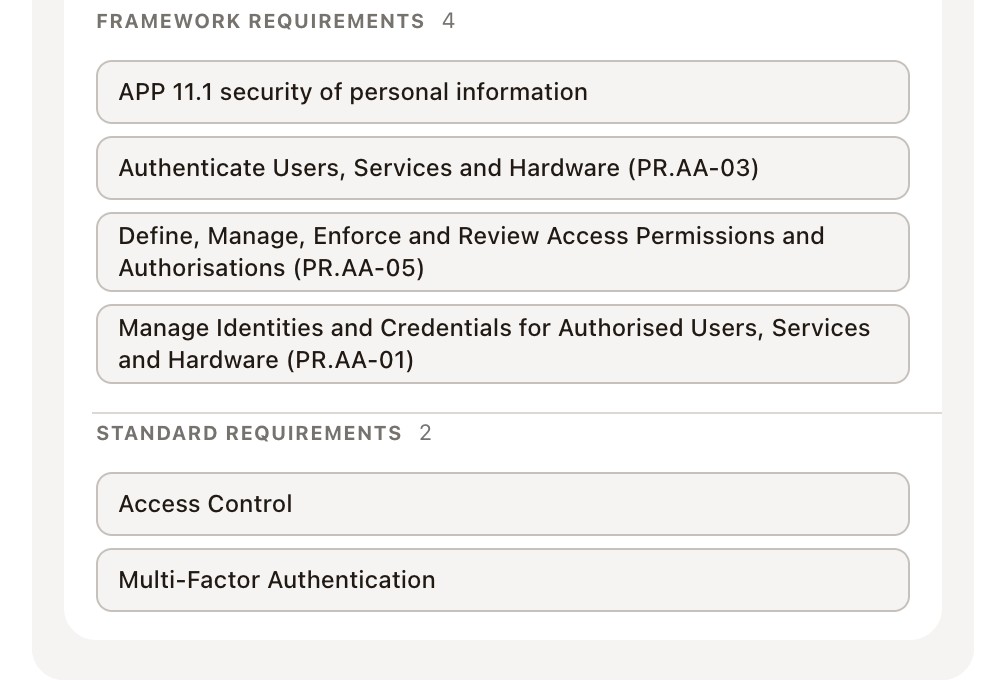
Requirements link to the clauses of the frameworks and standards you answer to, the same library your risk and compliance teams use.
Business case and change
Requirements sit under the business case they serve. That case carries its options and objectives, and the change it drives records the move from current to target, with dependencies that can't form a loop.

Every requirement on the record, with its reason beside it.
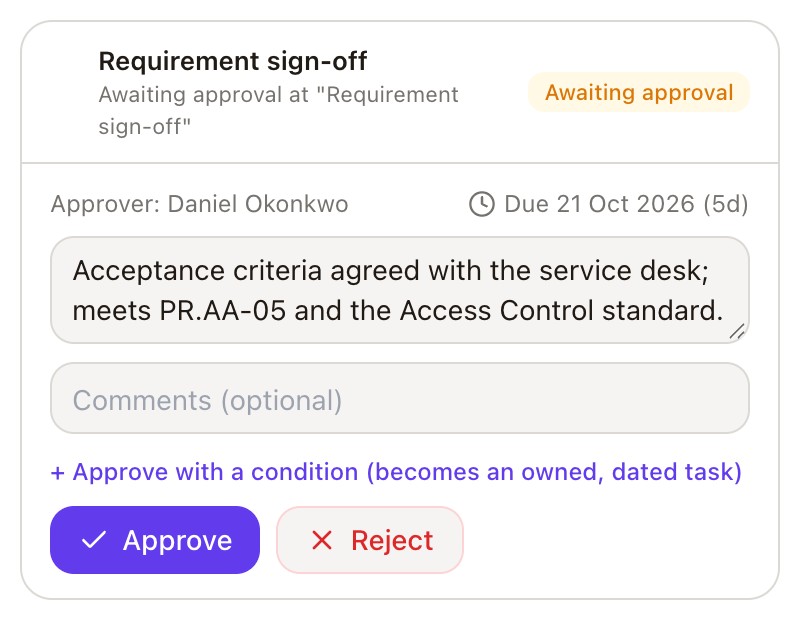
Sign-off on the record
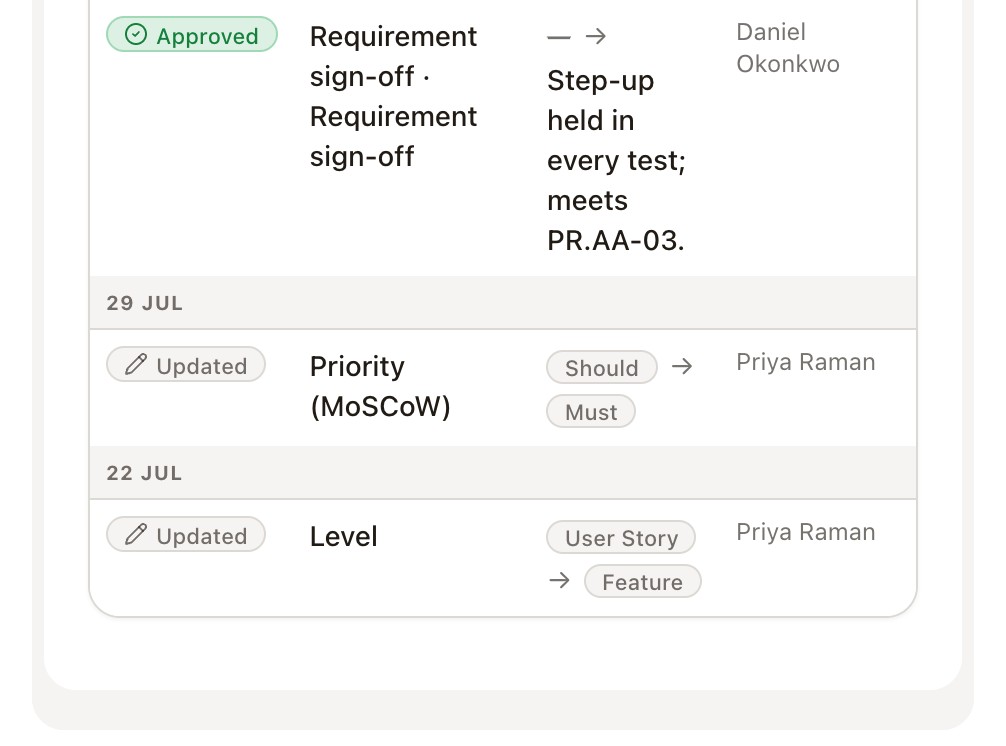
Approval goes through a governed step, not an email thread.
Compliance designed in
The clauses a requirement must meet are on it before the work starts, not found in the audit.
Done is defined up front
Acceptance criteria are written down before delivery, in a form testers can use.
Requirements shouldn't just describe the build. They should explain it.
You don't need a new method to start.
Built inside your Microsoft 365. Your data. Your controls. Your requirements.
Six levels, from epic through feature, user story, task and sub-task to detail, each with its parent and children on the record.